Why Does My Refrigerator Ice Taste Bad?
Bad-tasting refrigerator ice almost always comes from one of three places. The usual causes are cubes that have sat too long and absorbed freezer odors, a dirty ice bin, or a water filter that’s past its useful life, and dumping the ice, washing the bin and fitting a fresh filter fixes most cases within a day or two.
Ice is a lot like a sponge for smells. It has no flavor of its own, so it takes on whatever is around it. A bag of frozen shrimp, last week’s chili, an open box of fish sticks or a coffee bag tucked in the door can all end up in your glass of iced tea.
The good news is that a simple taste test tells you which source you’re dealing with, so you can skip straight to the fix.
Run a Quick Taste Test
Pour three small glasses: one from the kitchen tap, one from the fridge dispenser, and one from a few melted ice cubes. Let them reach room temperature, since cold dulls flavor and hides off notes.
- Melted ice tastes off, but dispenser water is fine: the ice itself is the problem. It’s stale or picking up freezer smells.
- Dispenser water tastes like the tap: the filter is likely spent or not fully seated.
- All three taste bad: the issue is probably your home’s water supply or plumbing.
If it’s your drinking water that tastes odd after a filter change, see our guide on why refrigerator water tastes bad after a new filter.
What the Flavor Tells You
The specific taste is a strong clue.
- Stale or flat: cubes that have been sitting in the bin for weeks.
- Garlic, onion, fish or leftovers: food odors traveling through the freezer air.
- Musty or earthy: residue or mildew in the ice bin, chute or around the ice maker.
- Chlorine or chemical: a filter that can no longer reduce chlorine taste and odor.
- Plastic: new supply tubing, a brand-new fridge or a recently replaced water line.
- Metallic or chalky: minerals in hard water, or older plumbing in the house.
Dump the Old Ice and Clean the Bin
Stale ice and odor buildup cause more bad-tasting ice than anything else, and fixing them costs nothing.
Why Ice Goes Stale
Most ice makers only make a new batch when the bin runs low. In a household that rarely uses ice, the same cubes can sit for a month or longer. Over that time, the surface of each cube slowly evaporates and refreezes, trapping odor molecules from the freezer air. The cubes at the bottom of the bin are usually the worst.
Clean the Bin in Six Steps
- Turn off the ice maker using the switch, arm or control panel setting on your model.
- Pull out the bin and empty all the ice into the sink.
- Wash the bin in warm water with a few drops of mild dish soap, using a soft cloth. Scouring pads leave scratches where odors can cling.
- For musty smells, wipe the inside with a mix of equal parts white vinegar and warm water, then rinse well.
- Dry the bin completely so new cubes don’t freeze together into a block.
- Wipe the chute and the area around the ice maker with the same vinegar mix, then put the bin back and switch the ice maker on.
Skip bleach and strong cleaners. They can damage the plastic and leave a taste of their own.
Get Into an Emptying Habit
If your household doesn’t go through ice quickly, dump the bin every few weeks, even if it looks fine. It’s the single easiest way to keep cubes tasting fresh.
Stop Freezer Odors at the Source
Your fridge circulates air between compartments, so a smell in one section can reach the ice maker. A few small changes make a big difference.
- Store leftovers in airtight containers rather than loosely covered bowls.
- Double-bag fish, onions, garlic and anything in thin packaging.
- Toss freezer-burned or forgotten items. They’re often the hidden source of a stale smell.
- Wipe the freezer walls and shelves with a solution of baking soda and warm water.
- If your fridge has an air filter, check when it was last changed. A fresh one helps cut down the odors circulating through the cabinet.
Replace a Spent Water Filter
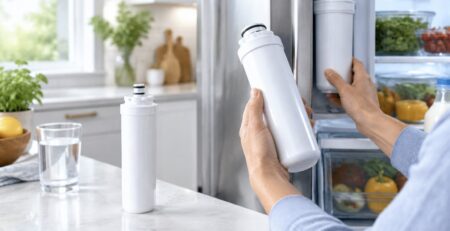
If the ice still tastes like chlorine after you’ve cleaned the bin, the water filter is the next stop. Most refrigerator filters use activated carbon to reduce chlorine taste and odor. Once that carbon is used up, those flavors go straight through to the ice maker, and your cubes start tasting like tap water.
Most manufacturers recommend changing the filter about every six months, or sooner if you reach its gallon rating. If you can’t remember when you last swapped it, treat it as overdue. Off-tasting ice is one of the more common signs your refrigerator water filter is failing, along with slower flow and smaller cubes.
When it’s time for a new one, our refrigerator water filter shop has genuine OEM and certified compatible options for the major fridge brands, priced below the big-name retailers. Multipacks bring the cost per filter down further, and shipping is free.
Start Fresh After the Swap
A new filter needs a clean start to show its full effect.
- Turn off the ice maker and empty the bin.
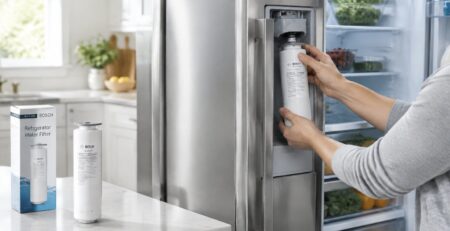
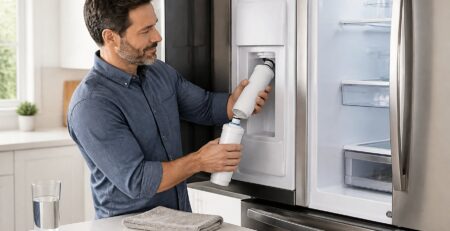
- Install the new filter until it locks fully into place.
- Flush it by running water through the dispenser for the amount your filter instructions list.
- Switch the ice maker back on and throw out the first batch or two of ice.
- Give it about a day to refill the bin with fresh cubes.
If Fresh Ice Still Tastes Off
A clean bin and a fresh filter fix most kitchens. If yours still has a problem, look upstream.
New Plumbing or a New Fridge
New plastic supply lines, fittings and brand-new refrigerators can give ice a plastic taste for the first several batches. Keep discarding the ice and running extra water through the dispenser, and the taste usually fades within a week or two.
Water Sitting in the Line
After a vacation, water left in the line and the ice maker goes stale. Run a pitcher or two through the dispenser and dump the bin when you get home. Turning off the ice maker before a long trip avoids the problem entirely.
Hard Water and Softeners
Hard water carries minerals that can give ice a metallic or chalky edge and leave scale on ice maker parts. Softened water can make ice taste slightly salty. If every tap in the house tastes off, or you notice unusual smells such as rotten egg, have your water tested or check your local utility’s water quality report.
Frequently Asked Questions
Why does my ice smell bad even when the bin looks clean?
Odors cling to the ice, not just the bin. Cubes that have been sitting for weeks will smell like the freezer even in a spotless bin. Dump them and let the ice maker start over.
Can I put baking soda in the freezer to protect the ice?
Yes. An open box of baking soda in the freezer helps absorb odors. Swap it out every few months so it keeps working.
Why does the ice from my new fridge taste like plastic?
New refrigerators and supply lines often give off a plastic taste at first. Throw out the first several batches and flush water through the dispenser, and it should clear up.
Does cloudy ice mean the ice is bad?
Not usually. Cloudiness mostly comes from air and dissolved minerals trapped as the water freezes. On its own, it doesn’t change the taste or mean your filter has failed.
Find Your Filter and Enjoy Better Ice
Fresh ice starts with the right filter for your fridge. Look up your model in our Cross Reference Filter Tool, or drop us a note with your model number and our team will tell you exactly which filter fits. Every order ships free.