Refrigerator Water Tastes Bad After New Filter: What to Check First
You swapped in a fresh cartridge expecting crisp, clean water. Instead, the first glass tastes flat, plasticky, or a little like pool water. When your refrigerator water tastes bad after new filter installation, it is easy to assume you bought the wrong part or that something is broken.
In most cases, the fix is to flush the new filter by running the amount of water your refrigerator’s manual calls for, which clears trapped air and loose carbon particles. If the taste is still there after a full flush, the next suspects are the filter’s fit and seal, your home’s water supply, and the supply line, dispenser, or ice bin.
The steps below go from easiest to most involved. You will be able to tell a normal break-in taste from a real problem. You will also know when to reseat or replace the filter, and when to stop drinking the water and get help.
What Should You Try Right After a Filter Change?
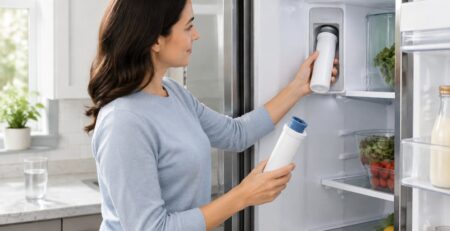
Your first step is to flush the new filter and throw away the first few batches of ice. New cartridges hold air, and carbon filters shed a small amount of fine carbon dust. Both clear out as water moves through the system. Give the flush a fair chance before you pull the filter or order a new one.
Refrigerator Water Tastes Bad After New Filter: Will Flushing Help?
Flushing fixes the most common break-in problems. It pushes out trapped air, which causes sputtering and cloudy water. It also washes away carbon fines, the tiny black particles left over from making activated carbon filters.
The Environmental Protection Agency (EPA) says many filters need a priming step, and that cloudy water or black carbon dust at first is normal. Its guide to installing a water filter notes these particles should go away as you finish priming.
Flushing will not fix every off taste. It will not help if the filter is the wrong model, poorly seated, or used up. It also does nothing for odors that come from your home’s water, the plumbing, or old ice. If a full flush does not help, move on to the checks in the next sections.
How to Flush the Filter Using Your Refrigerator’s Instructions
Flush amounts vary by brand and model, so start with your owner’s manual. Here are two real examples of how much they differ:
- Samsung: Samsung’s filter replacement steps for HAF-CIN, HAF-QIN, and HAF-CU1 filters say to dispense water for about 7 minutes, or 10 to 12 large glasses, and throw it away.
- Other guides: Some general instructions suggest about two gallons. Whirlpool, GE, LG, and Frigidaire manuals each give their own figure for specific models.
A basic flush that works with most dispensers looks like this:
- Make sure the filter is locked in and the water supply is on.
- Hold a large pitcher under the dispenser and press the paddle.
- Run water in short bursts of 30 to 60 seconds, with brief pauses, so the dispenser does not stall.
- Keep going until you reach your manual’s amount and the water runs clear with no sputtering.
- Empty the ice bin and throw out the next few batches of ice.
- Reset the filter indicator if your model has one.
You can use the flushed water on houseplants. If your manual lists a larger volume than you expected, follow the manual.
What Does the Taste or Smell Tell You?
What you taste, smell, or see gives you a strong clue about the cause. Some signs point to normal break-in. Others point to your water source or a fit problem. Match what you notice to the groups below before you take anything apart.
Black Specks, Cloudiness, or Sputtering
Black specks in the first few glasses are usually carbon fines, leftovers from the filter media that should fade as you flush. The EPA treats early carbon dust as a normal part of priming, but how water looks cannot tell you whether it is safe. If specks keep showing up after a full flush, the filter may be faulty, or the wrong cartridge may be letting media escape.
Cloudy or milky water after a filter change is usually tiny air bubbles. To check, pour a glass and let it sit for a minute. If it clears from the bottom up, it is air. If it stays cloudy, look at the filter seal and your supply water.
Sputtering or spitting from the dispenser means air is still moving through the lines. Keep dispensing in short bursts until the stream runs smooth. If sputtering lasts through a full flush, the filter may not be locked all the way in.
Plastic, Chlorine, Metallic, or Musty Tastes
Each type of taste tends to point to a different source:
- Plastic taste: This is common with new filter housings and new supply lines. It usually fades with flushing. Whirlpool says new plumbing, including PVC pipes and fittings, can cause off-flavored ice and water.
- Chlorine or “pool” taste: Chlorine taste reduction is a claim under NSF/ANSI Standard 42. A strong chlorine taste after flushing can mean the water is bypassing the filter or the cartridge is not rated for it.
- Metallic taste: This often comes from home plumbing or the water source. It can also happen if the fridge is hooked to a hot water line.
- Salty or chemical taste: Softened water is a known cause. Whirlpool warns against connecting ice makers to a softened water supply for this reason.
- Musty or stale taste: Old ice, a dirty ice bin, or strong food odors are likely. Air moves between the fridge and freezer sections, so smells spread to ice.
If only the ice tastes off, the problem is less likely to be the new filter. Check the ice bin and your food storage first.
What if Flushing Does Not Fix the Taste?
If the taste lasts after a full flush, work through three checks in order: the filter itself, your tap water, then the line and dispenser. This order moves from the part you just changed to the parts you may not have touched in years.
Check the Filter Model, Seal, and Installation
Start by confirming the part number. Many filters look alike but are not the same. A cartridge that goes in but does not seal fully can let water flow around the filter media.
Look for common mix-ups like these:
- Whirlpool Filter 1 is sold as the EveryDrop EDR1RXD1 and under the part number W10295370A. Those are the same filter. Filters 2 through 8 fit different models.
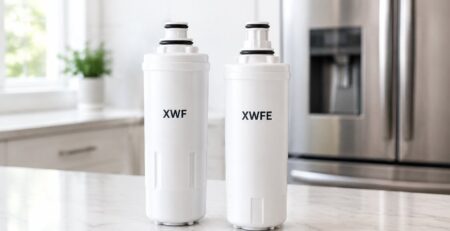
- GE has several similar names. The GE XWF and GE MSWF filters fit different refrigerators than the MWF.
- LG uses several cartridges. The LG LT500P fits different models than the LT700P or LT1000P.
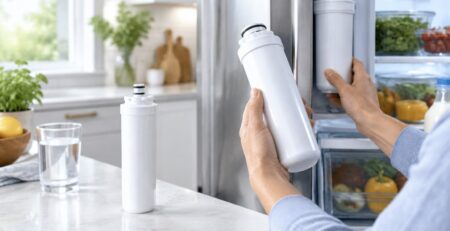
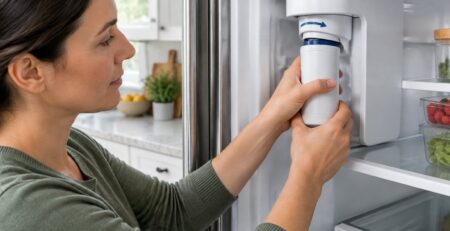
Next, check the seal. Remove the filter and look for a missing O-ring or a protective cap you forgot to take off. Samsung, for example, says to remove the cap before installing its filters. Then reinstall it until it locks, and make sure the alignment marks line up.
Also look at the certification claims for that exact cartridge. NSF/ANSI 42 covers taste and odor, including chlorine. NSF/ANSI 53 covers health-related contaminants like lead. NSF/ANSI 401 covers certain emerging contaminants. Water Quality Association (WQA) certification is a separate program. A seal on the box does not mean the filter reduces every contaminant, so read the listed claims for your model.
Compare Dispenser Water With Tap Water
Pour a glass from the kitchen faucet and one from the fridge dispenser. Taste them side by side at the same temperature.
- Both taste bad: The problem is likely your water supply or home plumbing. A fridge filter can only reduce what it is certified for.
- Tap tastes fine, dispenser tastes bad: The problem is inside the fridge system. That points to the filter, the supply line, or the dispenser.
- Both taste fine, but ice tastes bad: Focus on the ice maker and bin.
If your tap water changed recently, call your water utility. Utilities sometimes adjust treatment or flush water mains, and that changes taste for a while.
Inspect the Supply Line, Dispenser, and Ice
Pull the fridge out and check the water line behind it. Look for kinks, cracks, or old plastic tubing. Whirlpool recommends a copper line or its water installation kit (part 8003RP or 8212547RP). The company also says to confirm the fridge is on the cold water line.
Clean the parts you drink from. Wipe the dispenser pad, the nozzle, and the ice chute. Whirlpool’s guide to odd-tasting water and ice suggests wiping these weekly. It also advises emptying the ice bin every 2 to 4 weeks.
Throw away all stored ice. Then allow 24 hours for the ice maker to make a fresh supply before you judge the taste again. While you wait, wrap strong foods like fish, onions, and coffee in airtight containers.
When Should You Stop Using the Water and Get Help?
Taste, smell, and appearance alone cannot tell you whether water is safe or unsafe. Still, stop drinking from the dispenser if the water smells like rotten eggs, sewage, or fuel, looks brown or rusty, or if your area has a water advisory. Use bottled water while you contact your water utility and check official advisories for your area.
Persistent Odors, Discoloration, or Signs of a Water Supply Problem
Some signs point beyond the filter and call for a pause:
- A strong sulfur, sewage, or chemical smell that stays after flushing
- Brown, yellow, or rusty water from both the tap and the dispenser
- Black particles that keep appearing after a full flush and a reseated filter
- Leaks around the filter housing or behind the fridge
- Stomach upset in your household after drinking the water
Pay attention to local alerts too. The Centers for Disease Control and Prevention (CDC) says that during any drinking water advisory, you should not use fridge water or ice. That includes boil water notices. A fridge filter does not make water safe during an advisory.
After an advisory ends, follow your utility’s steps. Those steps often include flushing the lines, replacing the filter, and throwing out old ice.
How to Find Model-Specific Instructions or Filter-Matching Help
Start with the model number on the label inside your fridge. It is often on a side wall or near the crisper drawers. With that number, you can find the right owner’s manual, flush amount, and reset steps. LG and Samsung both let you look up manuals and matching filters by model number on their support sites.
If you are not sure which cartridge you need, a filter cross-reference tool can match your fridge model or old filter number. If the part number on your old cartridge is worn off, send your fridge model to the seller and ask for a match.
Getting Back to Better-Tasting Fridge Water
Most off tastes after a filter change clear up with a full flush and a fresh batch of ice. Use the amount your manual lists, since that ranges from about 7 minutes on some Samsung models to other figures elsewhere. If the taste stays, check the part number, the seal, your tap water, and the supply line, in that order.
One habit prevents a lot of repeat trouble: write your fridge model and filter number on a sticky note inside the fridge door. That makes the next swap faster and cuts the risk of buying a look-alike cartridge. Setting a six-month reminder helps too, and these benefits of changing your fridge filter show why timing pays off. More refrigerator filter troubleshooting guides are on the blog.
When you need a replacement, match your filter by model number at FilterForFridge.com. Certified OEM and compatible options start under $30, with free shipping in the lower 48 states.
Frequently Asked Questions
How Much Water Should I Flush After Installing a New Fridge Filter?
Flush the amount listed in your refrigerator’s owner’s manual, since it varies by brand and model. Samsung, for example, calls for about 7 minutes of dispensing, or 10 to 12 large glasses. Other guides suggest around two gallons, so check your model before you stop.
Are Black Specks After a Filter Change Carbon Fines?
Black specks in the first few glasses are usually carbon fines from the filter’s activated carbon. They are a normal part of priming and should clear with flushing, though appearance alone does not show whether water is safe. If they keep appearing after a full flush, reseat the filter and confirm you have the correct part number.
Why Does My Fridge Water Still Taste Like Chlorine With a New Filter?
A lasting chlorine taste often means water is flowing around the filter because of a poor seal or the wrong cartridge. Check that your filter lists chlorine taste and odor reduction under NSF/ANSI 42. Compare with tap water too, since a recent utility treatment change can make chlorine stronger.
Why Does the Water Taste Fine but the Ice Tastes Bad?
When only the ice tastes off, the ice bin or food odors are the likely cause. Empty the bin, wipe the chute, and seal strong-smelling foods. Then give the ice maker 24 hours to make fresh ice.
Could a Compatible Replacement Filter Cause an Off Taste?
A compatible filter can cause an off taste if it does not match your model or does not seal fully. A properly fitted compatible filter with the right certifications for your needs should perform as claimed after flushing. Check the exact part match and the listed NSF or WQA claims for that specific cartridge before ordering.