Whirlpool Refrigerator Water Filter Replacement: Find the Right Fit
You open the fridge, the filter light is glowing, and the old cartridge has no clear label on it. A Whirlpool refrigerator water filter replacement looks like a small errand until you see how many cartridges share similar names, numbers, and shapes. The right replacement is the filter your refrigerator model is approved to use (EveryDrop Filter 1, 2, 3, 4, or another number), or a compatible cartridge that lists that exact filter number.
Getting it right affects more than the fit. The wrong cartridge may not lock in place, may leak, or may not reduce the contaminants you care about. Genuine filters also carry a real cost each time you replace them, and most homeowners change them twice a year.
You will learn how to read your model number and old cartridge, and how to match your fridge to the right EveryDrop number. You will also see how to weigh genuine and compatible filters on certification claims and price per filter. With that in hand, you can buy once and buy correctly.
How Do You Find the Filter That Fits Your Whirlpool Refrigerator?
Start with your refrigerator model number, then confirm it against the number printed on your current cartridge. These two numbers together tell you which filter fits. If either one is missing, a filter finder or a quick question to a support team fills the gap.
Check the Refrigerator Model Number First
Your refrigerator model number is the most reliable starting point. It does not change, even when filter part numbers get updated or renamed. Whirlpool model numbers start with letters and run about 6 to 12 characters, such as WRS325FDAB or WRS322FDAB.
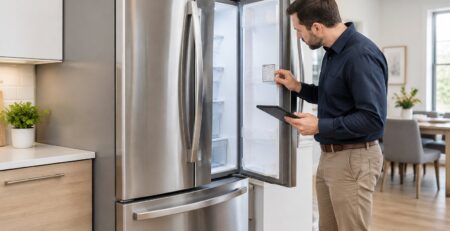
The label sits in different places depending on the refrigerator style. Check these spots:
- The ceiling of the fresh food section
- The inside walls of the refrigerator or freezer, sometimes behind a drawer
- The frame next to the door when the door is open
- Behind the kickplate at the bottom front
- The back of the refrigerator
Your owner’s manual also lists the correct filter in its “Accessories” section. Write the model number down or take a photo of the label before you shop.
Read the Part Number on the Current Cartridge
The old filter tells you what worked before. Remove it and look along the side of the cartridge for a printed part number. You may see a current number like EDR1RXD1 or an older one like W10295370A.
Older numbers are common because Whirlpool renamed many filters under the EveryDrop line. For example, W10295370A was replaced by Filter 1 (EDR1RXD1). Both numbers point to the same fit.
Be careful if the cartridge came with a used home or was installed by someone else. It may be a compatible brand with its own number, or it may be the wrong filter. That is why the model number should back up whatever the cartridge says.
Use a Filter Finder When the Label Is Missing
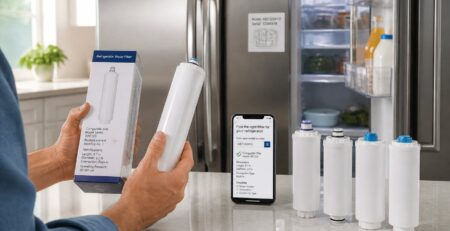
A filter finder matches your refrigerator model to the approved cartridge. You type in the model number or an old filter number, and the tool returns a match.
If the label is faded or you get no result, ask a person. Send your model number to the seller’s support team and ask for a match before you order.
Which EveryDrop Filter Does Your Model Use?
Most current Whirlpool refrigerators with a filter use one of EveryDrop Filters 1 through 4, though some use Filter 5, 6, 7, A, or others. Each number has its own shape, locking style, and location. Use the details below to check your match, and always confirm with your model number.
Filter 1 and Filter 2: Check EDR1RXD1 and EDR2RXD1 Against Your Model
Filter 1 (EDR1RXD1) sits in the upper right corner inside the fridge on some models and in the base grille on others. It slides into place with the arrow pointing up. It replaces older numbers including W10295370A, W10295370, and Kenmore 46-9930 and 9081. It fits some side-by-side, top freezer, and bottom freezer models from Whirlpool, Maytag, KitchenAid, Jenn-Air, and Amana. Filter 1 is rated for 6 months or 200 gallons, whichever comes first.
Filter 2 (EDR2RXD1) also sits in the upper right corner inside the fridge. It installs at an angle, then turns clockwise to lock. That twist-lock design is one reason Filter 1 and Filter 2 cannot be swapped, even though both live in the same area on many models. Filter 2 is also rated for 200 gallons.
Filter 3 and Filter 4: Check EDR3RXD1 and EDR4RXD1 Against Your Model
Filter 3 (EDR3RXD1) sits in the left side of the base grille. You release it with an eject button, and the new cartridge needs its cap moved over. Older numbers include 4396841, 4396710, and Kenmore 46-9030 and 46-9083. It is rated for 200 gallons.
Filter 4 (EDR4RXD1) sits in the upper right corner inside the fridge and turns to lock. It is the same filter family as Maytag UKF8001 and Kenmore 9992. Like Filters 1 through 3, it is rated for 6 months or 200 gallons.
If you own a Maytag or Kenmore model, check your model number the same way. Many use these same Whirlpool-made cartridges under different labels.
Why Similar-Looking Cartridges Are Not Necessarily Interchangeable
Two filters can look nearly the same and still fail to fit. Small differences in the locking tabs, O-ring size, or water port layout decide whether a cartridge seals. A filter that almost fits can leak or skip filtration entirely.
Similar looks also hide different performance. Whirlpool lists EveryDrop Filter 3 as reducing 74 contaminants, while Filter 4 is listed at 32. Same brand, very different claims.
This matters more if you manage several refrigerators. Each brand uses its own numbering, such as LT500P for LG or XWF and MSWF for GE, and each of those is a separate cartridge. Match each fridge by its own model number.
How Should You Compare Genuine and Compatible Filters?
Compare them in this order: fit first, then the exact certifications, then the specific contaminants listed. A cheaper filter only saves money if it fits and reduces what you need it to reduce. A genuine filter only justifies its higher price if its claims cover something you care about.
Confirm Fit Before Comparing Prices
A compatible filter should name the exact EveryDrop number it replaces. Look for a clear listing like “EDR1RXD1 compatible” or “replaces UKF8001 / EDR4RXD1.” Vague wording like “fits most Whirlpool models” is a warning sign.
Genuine EveryDrop filters have one clear advantage here. Whirlpool approves them for your model, so fit is not a question. With a compatible filter, you rely on the maker’s fit claim, so check it against your model number before you buy.
Check the Exact Model’s WQA and NSF Claims
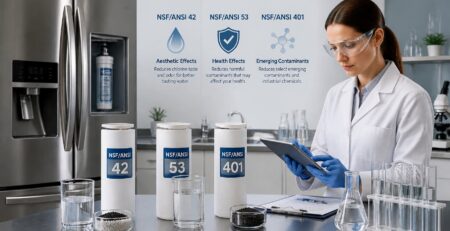
NSF International and the Water Quality Association (WQA) are separate organizations. Both certify filters to the NSF/ANSI (American National Standards Institute) standards, but a claim from one does not stand in for the other. Look for which body certified which standard for that exact cartridge.
The standards mean different things:
- NSF/ANSI 42: aesthetic effects, such as chlorine taste and odor
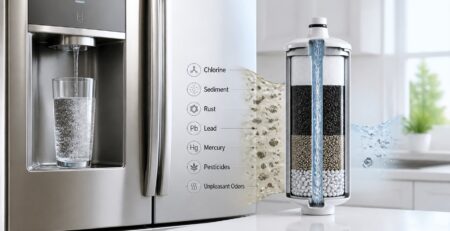
- NSF/ANSI 53: health effects, such as lead, mercury, and asbestos
- NSF/ANSI 401: emerging contaminants, such as some pharmaceuticals
Some filters meet one or two standards, and select filters meet all three. Whirlpool’s approved filters with lead claims are certified by NSF International to reduce 99% of lead at pH 6.5. That figure comes from Whirlpool’s refrigerator water filter certification details. A compatible filter with only an NSF 42 claim will not match that. For a closer look at why certified filtration is worth the effort, see these benefits of refrigerator water filters.
Compare the Contaminants Listed on Each Performance Data Sheet
The performance data sheet is where the real comparison happens. It lists each contaminant the filter is certified to reduce and by how much. The EPA advises that you review the water filter performance data sheet to confirm certification for your target contaminant.
Start with your water utility’s annual water quality report. If lead is a concern, look for lead on the data sheet under NSF/ANSI 53. If you mostly want better taste, an NSF/ANSI 42 chlorine claim covers that.
This is where fair trade-offs show up. A genuine Filter 3 lists a long contaminant range. A compatible Filter 3 may cost much less and still carry NSF 42 and 53 claims for the items you need. Read both before deciding.
What Will a Whirlpool Refrigerator Water Filter Replacement Cost?
Genuine EveryDrop filters often cost about $35 to $65 each, while certified compatible options start well below that. Pack size changes the math the most. Here is how to compare fairly.
Compare Current Single-Filter Prices and Pack Sizes
Prices in this section were checked in September 2026 and change often. A single genuine Filter 1, for example, runs about $42 to $50 from discount sellers.
Certified compatible options cost less. Single compatible Filter 1 and Filter 3 cartridges start around $32, and a compatible Filter 4 can cost under $25. A genuine Filter 3 sold under Kenmore numbers 46-9030 and 46-9083 can cost as little as $33.50.
Multi-packs lower the price further. Many filters come in packs of one to four, which suits homeowners stocking a year of changes or property managers with several units.
Calculate the Per-Filter Cost, Including Shipping
Divide the pack price by the number of filters, then add shipping. For example, a 4-pack of W10295370A (Filter 1) listed at $118.99 works out to about $29.75 per filter. Compare that with about $42 to $50 for a single genuine Filter 1.
Now add shipping. Free shipping keeps the per-filter number honest; paid shipping on a single filter can add several dollars. Check whether free shipping covers your state, since some sellers add a fee for Alaska and Hawaii.
Last, match cost to capacity. Filters 1 through 4 are each rated for 6 months or 200 gallons, so a 4-pack covers about two years for most homes.
What Should You Check After Buying?
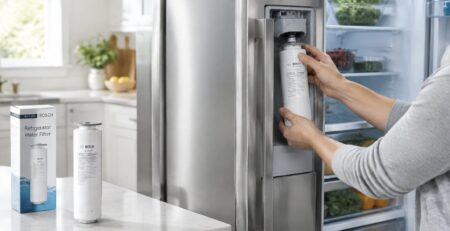
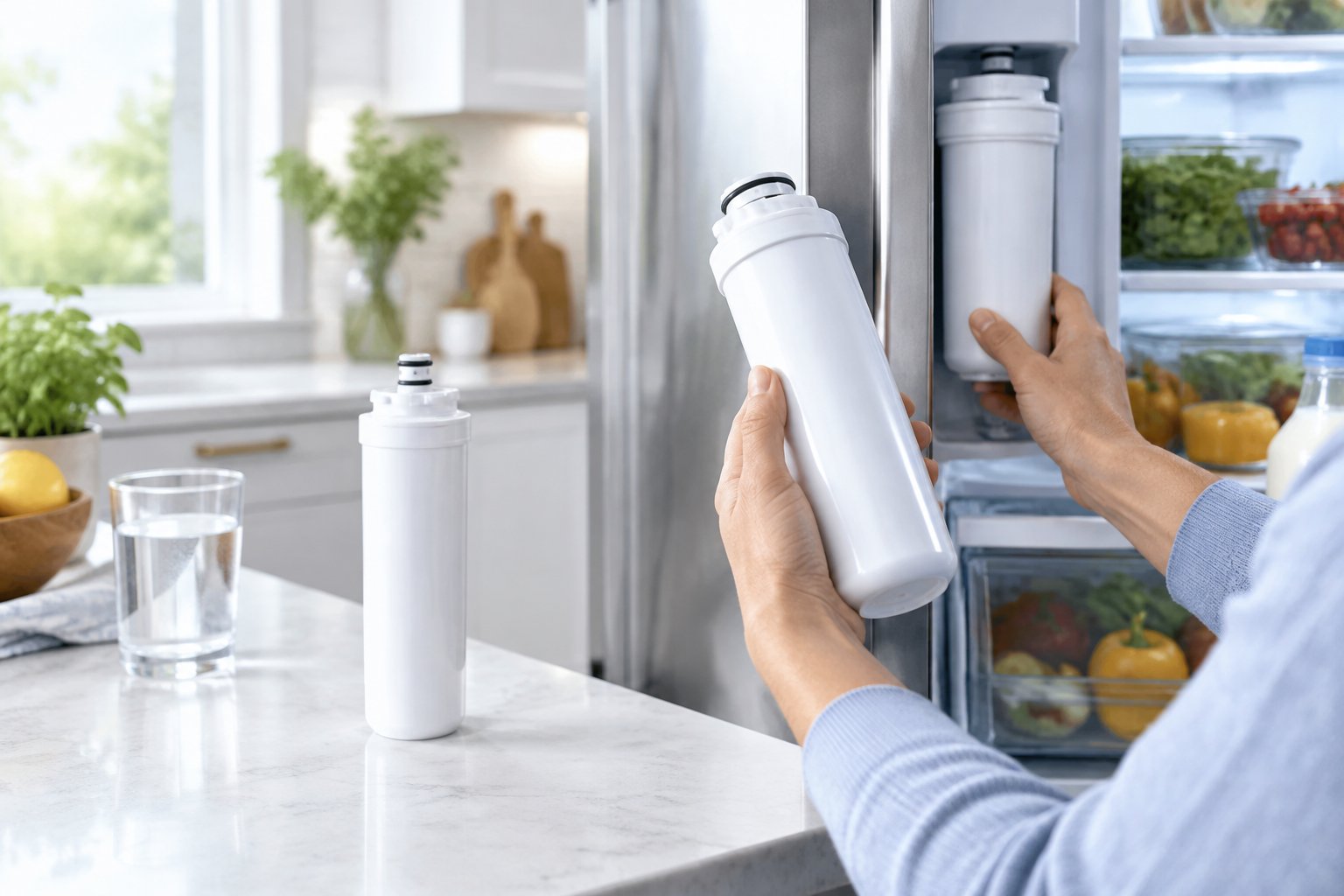
Each EveryDrop filter installs differently, so follow the steps for your cartridge and your owner’s manual. Whirlpool recommends running four gallons of water through the line after a change, and many models need a manual indicator reset. For the full walkthrough, see these refrigerator water filter guides.
Choose by Model, Then Compare the Claims and Cost
The right Whirlpool refrigerator water filter replacement starts with your model number and ends with a cartridge that lists your exact EveryDrop number. From there, you compare genuine and compatible filters on real details. Check NSF/ANSI 42, 53, and 401 claims, who certified them, and the contaminants on the data sheet.
A useful habit: keep your model number and filter number in your phone. Then you can reorder in minutes, and a 4-pack can drop your cost close to $30 per filter. Pair it with a six-month reminder email so the change never slips.
Ready to order? Use the refrigerator filter finder at FilterForFridge.com or email us your model number. Your certified replacement ships free in the lower 48 states.
Frequently Asked Questions
Are All Whirlpool Refrigerator Water Filters the Same?
No, Whirlpool uses several different filters, including EveryDrop Filters 1, 2, 3, and 4. Each has its own shape, lock, and location, plus different contaminant claims. Your model number decides which one fits.
How Can I Tell Whether a Compatible Filter Fits My Whirlpool Refrigerator?
Check that the compatible filter names your exact EveryDrop or older part number, such as EDR3RXD1 or 4396841. Then confirm that number matches your refrigerator model. If you are unsure, send your model number to a support team for a match.
Does an NSF Standard 42 Claim Mean a Filter Also Reduces Lead?
No, NSF/ANSI 42 covers taste and odor items like chlorine. Lead reduction falls under NSF/ANSI 53. Check the performance data sheet to see if lead is listed for that exact filter.
Will Changing the Filter Affect My Ice Maker?
Yes, for a short time. Air in the line can cause slow flow or small ice at first, so flush the system as your model directs. A clogged or poorly seated filter can also shrink ice cubes and slow production.
How Often Should I Buy a Replacement Filter?
Plan on a new filter every six months, or sooner if you reach the rated capacity. Filters 1 through 4 are all rated for 200 gallons. Replace it early if flow slows or the taste changes.