Is Fridge Water Filtered? How to Tell What’s Coming Out of Your Dispenser
Fridge water is filtered only when your refrigerator has a filter cartridge installed and that cartridge is still within its service life. The water starts as ordinary tap water from your home’s cold supply line, and on most refrigerators with a dispenser or ice maker it passes through a carbon filter on the way to your glass. If there’s no cartridge, a bypass plug in its place or a filter that’s long overdue, you’re drinking water that’s close to straight from the tap.
The dispenser works the same either way, which is why plenty of people never find out. A few quick checks will tell you which situation you’re in.
How Water Reaches Your Glass
A thin supply line connects the back of your fridge to a cold water pipe, usually under the kitchen sink or in the basement. Inside the fridge, that water runs to the filter housing first. After the filter, the line splits, sending water to the door dispenser and to the ice maker.
Because the filter sits before that split, one good cartridge treats both your drinking water and your ice. One worn-out cartridge affects both, too. If you’d like to see what happens inside the cartridge itself, our explainer on how refrigerator water filters work to purify water breaks down the layers.
Three Ways to Check Whether Your Fridge Has a Filter
Look in the Usual Spots
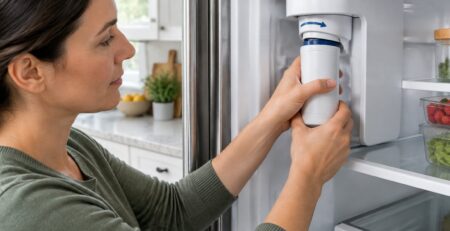
Refrigerator makers tuck filters into a handful of predictable places. Check these in order:
- Inside the fresh food compartment, often in the upper right corner or the ceiling, sometimes behind a small flip-down door.
- In the base grille at the bottom front of the fridge, where you press a button or twist a cap to release it.
- Inside the door or behind a panel near the top, on some built-in and specialty models.
- On the water line behind the fridge, in the form of a separate inline housing.
When you find a cartridge, note the part number printed on it. That number makes ordering the next one quick.
Check the Owner’s Manual
If you can’t find a housing, the manual settles it. Look for the model number on the label inside the fresh food compartment, then find the water filter section of your manual. It will tell you whether your fridge was built with a filter, which one it takes and where it lives. If your fridge has no filter section at all, the water you’re drinking is unfiltered tap water.
Rule Out a Bypass Plug
A bypass plug is a blank cap shaped like the end of a filter. It lets water flow when a filter has been removed, and it often stays in place long after a repair or a move. If you pull out what you thought was your filter and it feels light, hollow and short, it’s a plug. That means no filtration at all.
If you’ve found a plug, an empty housing or a cartridge you can’t identify, getting back to filtered water is easy. Browse our refrigerator water filter shop for genuine OEM and certified compatible filters for every major fridge brand, all at prices below the big-name retailers with free shipping.
Built-In Filters and Inline Filters
Most refrigerators with a dispenser have a filter built into the cabinet. Some older or simpler models have a dispenser but no internal housing, and their owners often add an inline filter on the supply line instead.
Both types do a similar job. The difference is access. A built-in filter is right in front of you every time you open the door, while an inline filter sits behind the fridge or under the sink. Out of sight is out of mind, so inline filters are the ones most likely to be years past due.
One thing to check if you have an inline filter: trace where it connects. If it feeds only part of the system, your ice maker might be drawing water that never passes through it.
What “Filtered” Actually Means for Your Water
A typical fridge cartridge uses activated carbon. As water passes through, chlorine and many organic compounds cling to the carbon’s surface, which is why filtered water usually tastes and smells cleaner than water straight from the tap. A fine outer layer catches sediment and rust particles.
What else a filter reduces depends on its certifications. Some cartridges are certified for specific contaminants such as lead, while others are certified mainly for taste and odor. The packaging or product listing will say which. Our guide to the contaminants a refrigerator water filter can reduce shows how wide that range is.
Keep expectations realistic, too. Fridge filters aren’t designed to make untested well water safe or to disinfect water. They improve the tap water you already have, and the quality coming out depends on the quality going in. Your water utility’s annual water quality report is the place to see what’s in your supply.
Is Your Filter Still Working?
Being installed isn’t the same as working. Carbon has a limited capacity, and once it’s used up, water passes through with very little treatment. Most refrigerator filters are rated for about six months, or a set number of gallons, whichever comes first.
Signs a Filter Has Run Its Course
- The install date is a mystery, which on its own is a good reason to replace it.
- Water flow has slowed, often a sign of a cartridge clogged with sediment.
- The chlorine taste is back, meaning the carbon is spent.
- Ice tastes stale or looks cloudy, since ice comes from the same line.
The filter indicator light helps as a reminder, but on most models it counts time or gallons rather than testing the water. A clean bill from the light doesn’t prove the filter is still doing its job. Our post on how often you should replace your refrigerator water filter explains what speeds up the schedule in busy households.
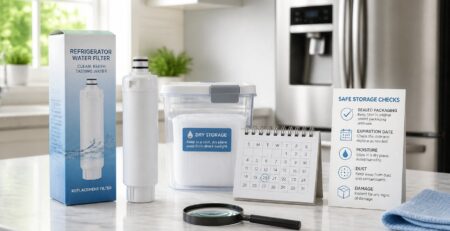
A simple habit fixes the guesswork: write the install date on the cartridge or on a strip of tape inside the housing every time you change it.
Frequently Asked Questions
Is fridge water just tap water?
It starts as tap water from the same pipes as your kitchen faucet. With a working filter installed, it’s tap water with chlorine taste and odor reduced, plus whatever else that cartridge is certified to reduce.
Do all refrigerators with a water dispenser have a filter?
No. Most do, but some budget and older models dispense water with no filter built in. Your owner’s manual will confirm which type you have.
Is the ice from my fridge filtered too?
On most refrigerators, yes, because the ice maker and dispenser share the same filtered line. The exception is some inline setups, so check where your inline filter connects if you use one.
Can I tell if water is filtered by tasting it?
Taste is a rough guide at best. A strong chlorine taste suggests the filter is missing or spent, but a filter can lose much of its capacity before you notice any change.
Make Sure Your Fridge Water Is Filtered
The easiest way to be sure is to put a fresh cartridge in and note the date. Find your exact match with our Cross Reference Filter Tool, or contact our team with your fridge’s model number and we’ll find the right filter for you. Your order ships free.