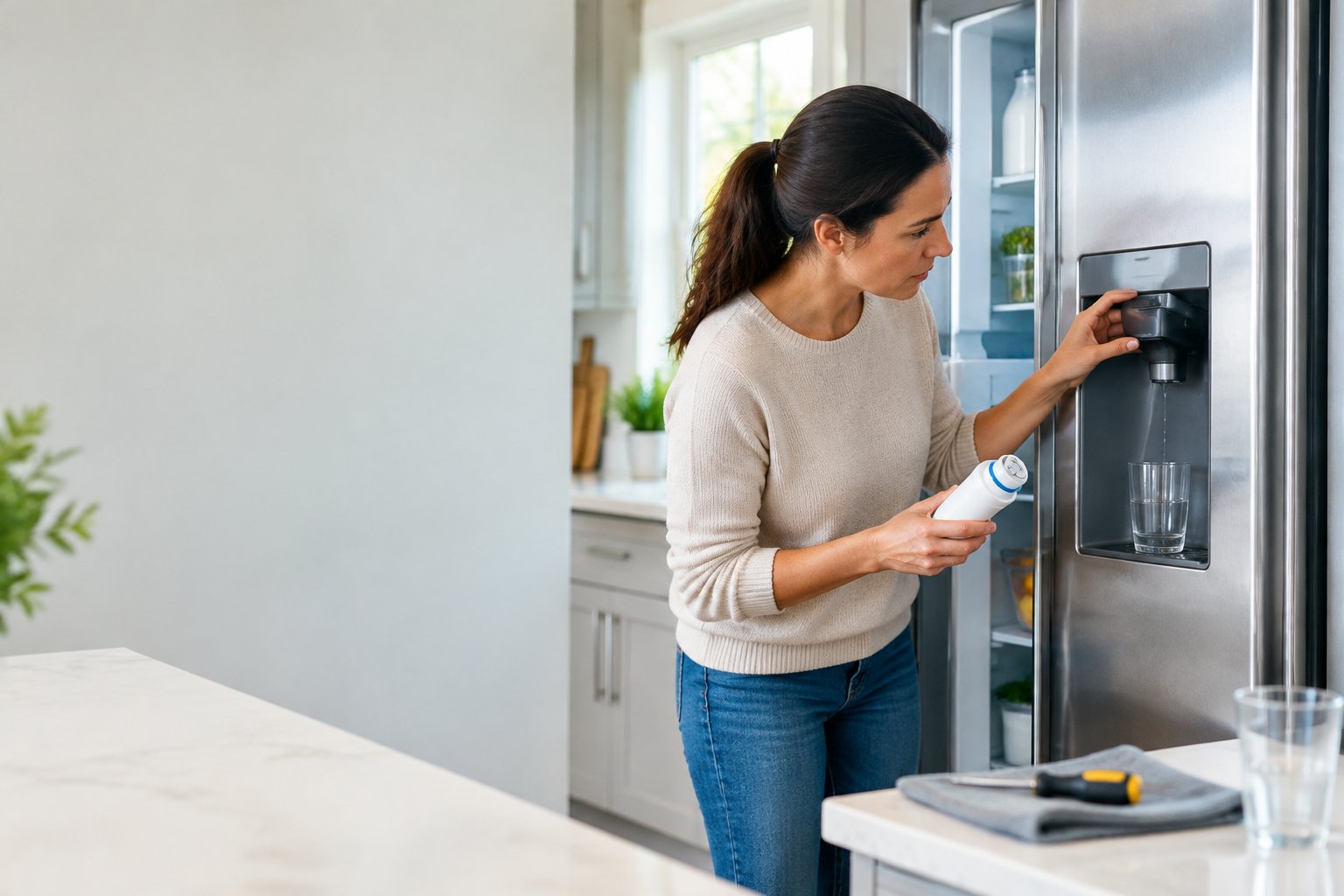
Refrigerator Water Dispenser Not Working? Find the Cause and Fix It
When you press the paddle and nothing comes out, the culprit is usually simple. A dispenser that gives no water at all is most often locked, blocked by a filter that isn’t seated or doesn’t fit, cut off at the supply valve, or frozen in the door line. All four can be checked at home in under an hour, without tools.
This guide is for a dispenser that has stopped completely. If water still comes out but takes forever to fill a glass, that’s a flow problem with its own list of causes.
Work through the checks below in order. They start with the quickest fixes and end with the parts that need a technician, so you won’t pay for a repair you didn’t need.
Start With the Two-Minute Checks
These sound too obvious to matter, but they account for a lot of “broken” dispensers.
Look for a Lock Icon on the Panel
Most dispenser panels have a lock or child lock feature that disables the paddle. A curious toddler, a wiped-down panel or a bumped button can turn it on without anyone noticing. If you see a padlock symbol lit, press and hold the lock button (often for about 3 seconds) until it turns off, then try again. Your owner’s manual will confirm the button and timing for your model.
Make Sure Every Door Is Shut Tight
On many models, a door switch disables the dispenser while a door is open. A freezer drawer that’s slightly ajar, or a door held off its seal by a tall container, is enough to stop the water. Close each door firmly, listen for the seal, and press the paddle again.
Think About What Changed Recently
A dispenser rarely dies for no reason. Ask yourself what happened in the last day or two:
- A new filter went in
- The fridge was pulled out for cleaning or moved
- Someone turned the freezer colder
- Plumbing work was done under the sink
Each of these points to a specific section below, so jump straight there if one fits.
Use the Ice Maker as a Clue
The ice maker and the dispenser usually share the same water path until it splits off toward the door. That makes the ice maker a handy diagnostic tool.
If the ice maker is still producing ice, water is reaching the fridge and passing through the filter. Your problem is somewhere on the door side: a frozen door tube, the paddle, or the dispenser switch.
If the ice maker has stopped too, look upstream. The filter, the shutoff valve, the supply tubing and the water inlet valve are the likely spots. A clogged filter often slows ice production well before the dispenser quits entirely, which is one reason clogged refrigerator filters affect your ice maker as much as your drinking water.
Rule Out the Water Filter
The filter is the part most likely to block water completely, and it’s the easiest to fix yourself.
A Filter That Isn’t Fully Locked
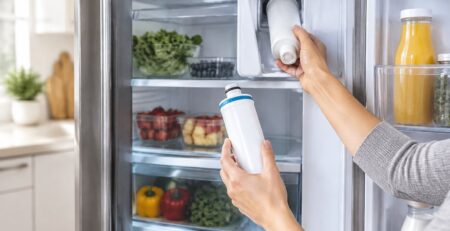
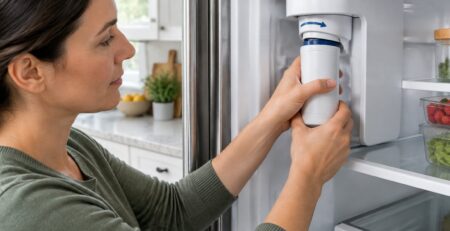
On many refrigerators, the filter housing has a valve that only opens when a cartridge is fully seated. A filter that’s one click or a few degrees short of locked can shut off the water entirely, which is why “no water right after a filter change” is such a common complaint.
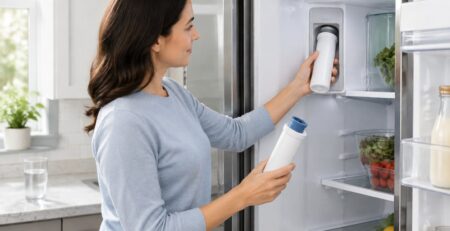
- Take the filter out using your model’s release method.
- Check that any protective cap or plastic wrap is off the connecting end.
- Push or twist it back in until it stops and locks.
- Hold a large cup under the dispenser and press the paddle in short bursts to push out trapped air.
Sputtering and spitting for the first minute or two is normal. Steady water means you’ve found your fix.
A Filter That Looks Right but Isn’t
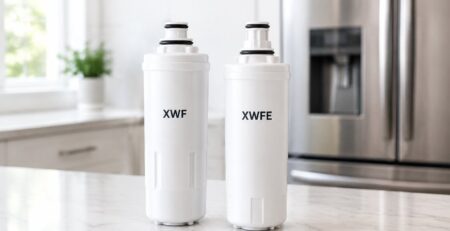
Two cartridges can look identical and still have different connection ends or locking tabs. A look-alike can sit in the housing without ever opening the water path. Compare the part number on the new filter with the old one and with the label inside your fridge. Our guide to finding the right refrigerator water filter shows where those numbers are printed.
A Filter That’s Completely Clogged
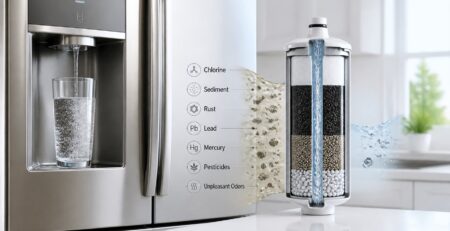
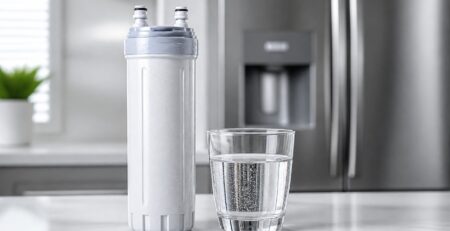
A cartridge that’s far past its replacement date, especially in a home with sandy or sediment-heavy water, can clog to the point of stopping flow. If your fridge came with a bypass plug, swapping it in for a moment tells you quickly: water flows with the plug, so the filter was the blockage. Only use a plug your manufacturer supplies, since many newer fridges won’t dispense without a filter in place.
If the filter turns out to be the problem, our refrigerator water filter shop carries genuine OEM and certified compatible replacements for the major brands at lower prices than the big-name retailers, with free shipping on every order.
Check the Water Getting to the Fridge
If a correct, fully seated filter still gives you nothing, the water may not be arriving in the first place.
Is the Shutoff Valve Open?
Find the valve feeding the refrigerator. It’s usually under the kitchen sink, behind the fridge, or in the basement directly below the kitchen. Valves get closed during plumbing jobs, filter changes and moves, then forgotten. Turn it fully open.
Is the Supply Line Crushed?
Pushing a fridge back against the wall after cleaning is the classic way to pinch the plastic supply tube flat. Pull the fridge out gently and follow the line from the wall to the back of the unit. A line that’s fully crushed or kinked shut will stop water completely. Straighten it, replace it if it’s creased or cracked, and leave a loose loop when you slide the fridge back.
Thaw a Frozen Door Line
This is the most common cause when the ice maker works but the dispenser doesn’t. The tube that carries water to the dispenser runs through the freezer door on many models, and if the freezer is set too cold, the water sitting in it can freeze solid.
Check your freezer setting first. Many manufacturers recommend around 0°F, so if yours is set lower, bring it back up.
To thaw the line safely:
- Unplug the refrigerator, or switch it off at the breaker.
- Move perishable food to a cooler.
- Leave the freezer door open for a few hours so the line warms up.
- Plug it back in and run a few glasses of water to clear any slush.
Some manuals list their own thawing procedure, so follow that if yours has one. Don’t aim a hair dryer or heat gun at the door, since direct heat can warp plastic tubing and panels.
Listen Before You Call a Technician
If every check above comes up clean, the fault is likely an electrical or valve part. Before you book a visit, press the paddle in a quiet kitchen and listen. What you hear helps the technician start in the right place.
- A hum or buzz, but no water: the water inlet valve is getting power but not opening, or water isn’t reaching it.
- A click, but no hum: the switch is working, so the valve or its wiring is the suspect.
- Total silence: the dispenser switch, the paddle, a door switch or the control signal is the more likely cause.
These parts involve household wiring and pressurized water, so they’re a job for an appliance technician. Ask for the valve and switches to be tested before anything is replaced, because a frozen or crushed line can mimic a failed valve.
Frequently Asked Questions
Why does my dispenser work in the morning but stop by evening?
That pattern often points to a door line that’s freezing. Water sits in the tube between uses and slowly freezes, especially if the freezer runs very cold. Raising the freezer temperature slightly usually ends it.
Do I need to replace the whole dispenser?
Rarely. A dead dispenser almost always comes down to one part, such as the filter, the inlet valve or a switch. If the panel seems frozen, unplugging the fridge for a minute and plugging it back in is worth a try before anything else.
Will turning off the ice maker affect the dispenser?
On most models, no. The ice maker switch only controls ice production. If your dispenser stopped at the same moment you turned the ice maker off, check your manual, since a few panels group these controls together.
Is it safe to keep using the fridge while the dispenser is broken?
Yes. The dispenser is separate from the cooling system, so your food stays cold. If you see water leaking anywhere, close the supply valve until it’s repaired.
Get Water Flowing Again With the Right Filter
When the fix comes down to a new cartridge, getting the right one the first time saves another round of troubleshooting. Look up your fridge in our Cross Reference Filter Tool, or send our team your model number and we’ll find the match for you. Every order ships free.