Do Refrigerator Water Filters Expire If Unused? Safe Storage Checks
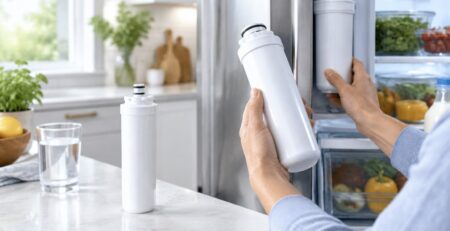
You are cleaning out the cabinet above the fridge and find a filter box you forgot about. Maybe it came with the house. Maybe you bought a three-pack two years ago, and life got busy. The box is still sealed, the price sticker is still on it, and now you are wondering whether it is still good.
That question, do refrigerator water filters expire if unused, comes up constantly with homeowners who stock up to save money. The short answer is reassuring but not a blanket yes. A sealed cartridge does not rot the way milk does. The packaging, the storage spot, and the age of the carbon all matter. Certified filters carry Water Quality Association (WQA) approval and National Sanitation Foundation (NSF) certification. Those ratings assume the filter reaches your fridge in the condition it left the factory.
Keep reading to learn how long a sealed filter realistically lasts in storage, what shortens that window, how to inspect an unopened cartridge before you install it, and when replacing it outright is the smarter call. The goal is simple: fewer minutes spent second-guessing appliance parts, more time on everything else.
The Practical Shelf Life of a Sealed Filter
A sealed refrigerator water filter has no true expiration date, unlike food. The activated carbon inside is a stable, inert material. What limits shelf life is the packaging around it and the conditions in which the box has been sitting.
Do Refrigerator Water Filters Expire If Unused After Years in Storage?
Most manufacturers do not print an expiration date on the cartridge itself. Some print a manufacture date or a lot code on the filter body or the box flap. A filter stored dry, sealed, and indoors is generally fine for several years.
The commonly cited window is two to five years for an unopened cartridge in good storage conditions. Beyond that, the risk is not that the carbon stops working. The risk is that the shrink wrap or foil pouch has developed a pinhole and the media has been breathing room air the whole time.
That matters because activated carbon works by adsorption. It pulls molecules onto its surface. If it has been slowly pulling in kitchen odors or garage fumes for three years, some of its capacity is already used before water ever touches it.
Shelf Life and Installed Service Life Are Different
Unopened fridge filter shelf life and installed service life are two separate clocks. Shelf life is how long the sealed cartridge stays usable in a box. Service life is the six months or rated gallons the filter runs once water flows through it.
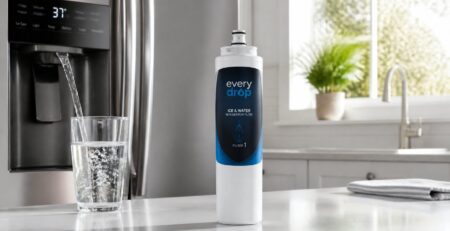
Installing a filter starts the second clock at zero. No matter how long the box sat. An EveryDrop Filter 1 (EDR1RXD1) rated for 200 gallons still gets its full 200 gallons if the seal holds. A GE MWF rated for 300 gallons behaves the same way.
So a three-year-old sealed cartridge is not a “used up” cartridge. It is an unknown one. The difference comes down to whether the packaging did its job.
Why Manufacturer Guidance Should Come First
Check the box before you check anything else. Whirlpool, LG, Samsung, GE, and Frigidaire all publish replacement intervals. Several note storage recommendations are in the insert sheet.
If the manufacturer prints a “best used by” date, treat it as guidance, not a hard cutoff. It usually reflects packaging integrity testing, not media failure. What the manufacturer cannot know is where your box has been living for the past few years.
What Can Shorten Storage Life
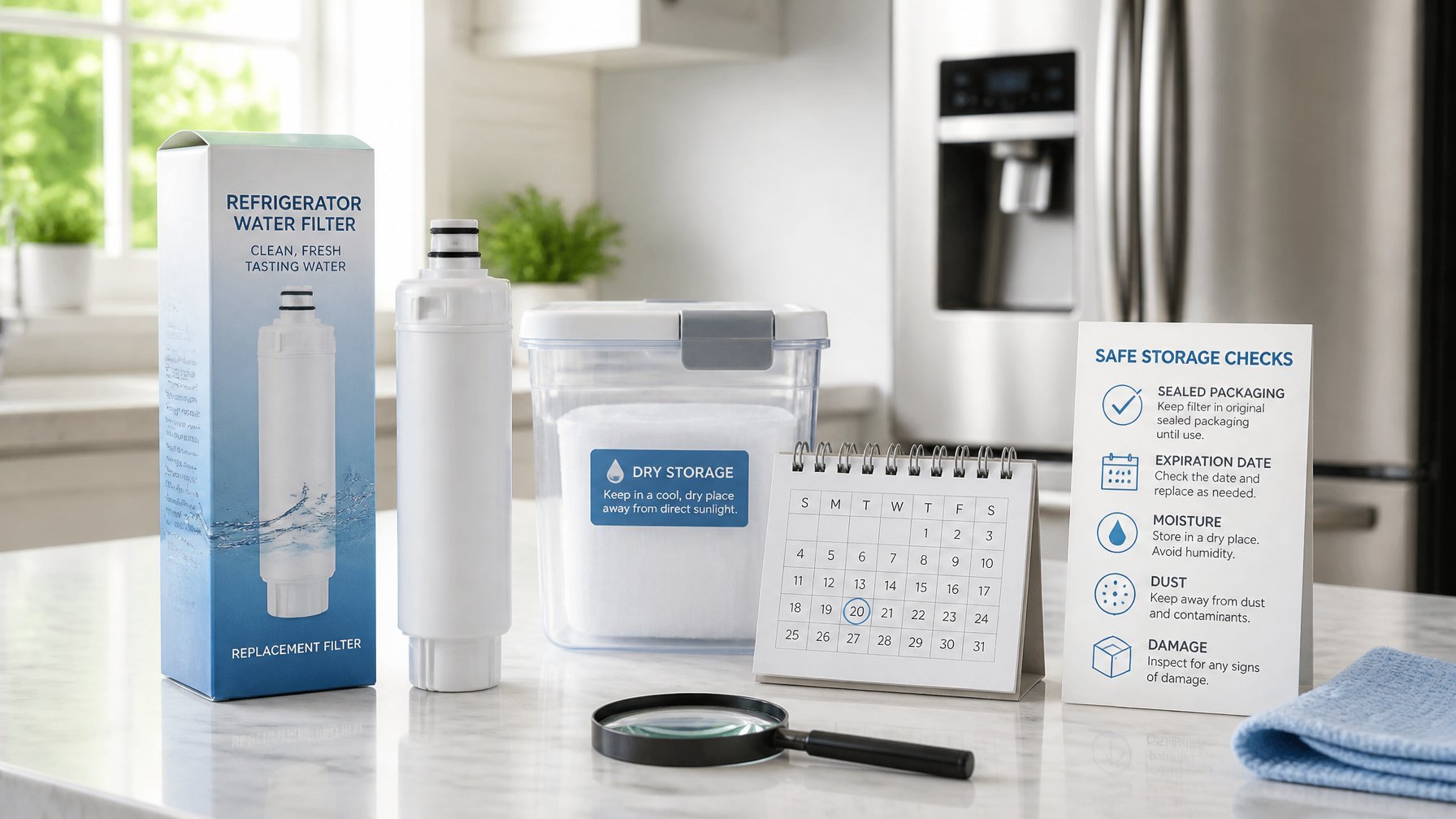
Storage conditions do more damage to unused refrigerator water filters than time alone. Heat, humidity, direct sun, and strong odors are the four that matter most.
Moisture, Heat, and Sunlight Can Damage a Filter
A garage shelf in a humid climate is the worst common storage spot. Moisture can work through a compromised seal and dampen the carbon block. Damp carbon in a sealed bag is a place where bacteria can start growing before installation.
Heat is the second problem. Repeated cycles above roughly 100 degrees Fahrenheit can soften plastic housings and warp O-ring seats. A warped seat on a Samsung DA29-00020B or an LG LT700P shows up as a slow drip after installation.
Ultraviolet light from a sunny window makes plastic brittle over time. A brittle housing can crack under the twist-in torque required by many interior-mount cartridges.
Store filters in conditions like these instead:
- Indoors, in a climate-controlled space between 50 and 80 degrees Fahrenheit
- Away from windows, water heaters, dryers, and exterior walls
- Upright in the original box, not loose in a drawer
- Off concrete floors, which pull moisture upward
Ambient Odors and VOCs Can Affect Activated Carbon
Activated carbon does not care whether the molecules come from water or air. It adsorbs volatile organic compounds (VOCs) from either one. That is exactly why the manufacturer seals it.
A filter stored next to paint cans, gasoline, motor oil, or cleaning chemicals can lose meaningful capacity if the seal is imperfect. The result is not visible. You will not see a color change. You may notice a faint chemical taste in the first few glasses after installation.
Note the practical limit here. As the Centers for Disease Control and Prevention explains in its guidance on choosing a home water filter, most refrigerator carbon filters target taste, odor, and certain metals, not germs. A filter that has spent capacity on garage fumes has less left for chlorine taste and odor reduction under NSF 42.
Packaging Damage Can Compromise the Filter Before Installation
Crushed corners on a box are usually cosmetic. A torn shrink wrap or a punctured foil pouch is not. Once the outer wrap is broken, the storage clock effectively restarts under worse conditions.
Missing protective end caps are another red flag. Those caps keep the inlet and outlet ports clean and protect the O-rings during shipping and shelving. Without them, dust and debris can sit right where the filter housing needs a clean seal.
So how do you tell a perfectly good three-year-old cartridge from a compromised one?
How to Inspect an Unopened Filter Before Use
A five-minute inspection answers most of the questions. You are looking for evidence that the seal held and the plastic is sound.
Check the Box, Factory Seal, and Protective Caps
Start with the outer packaging. Look for water stains, mildew smell, swelling, or a wrap that has separated at the seam. A clean, tight seal is a strong sign the carbon is still fresh.
Then open it and check the cartridge itself. Run through this quick list:
- Shrink wrap or foil pouch is intact with no tears or pinholes
- Protective caps are present on the inlet and outlet ports
- No musty, chemical, or sour smell when the pouch is opened
- No visible carbon dust is loose inside the packaging
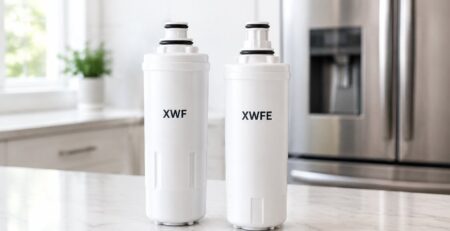
- The printed part number matches your fridge, for example, EDR3RXD1 or GE XWF
- Lot or manufacture date is legible if the brand prints one
If any of the first four fail, do not install it. A questionable filter is a much smaller loss than a service call for a leak.
Inspect the Housing and O-Rings for Damage
Run your finger around each O-ring. It should feel soft and springy, not dry, flat, or cracked. A hardened O-ring on a twist-in cartridge like the LG LT500P or the GE MSWF will not compress correctly into the head.
Check the plastic body for hairline cracks, especially near the bayonet tabs and the base of the port. Hold it up to a light and rotate it slowly. Cracks tend to show as faint white lines under stress.
Flex the cartridge gently. Old, sun-exposed plastic feels stiff and makes a faint creaking sound. New plastic feels solid without that brittle note.
Know When an Old Filter Is Safer to Replace
Some situations are not worth the gamble. Replace rather than install if the filter was stored in a flooded basement, a hot attic, or a garage next to solvents. Replace it if the seal is broken and you cannot say how long it has been open.
Money helps here. A certified compatible cartridge often costs 30 to 40 percent less than the OEM version. An Icepure RFC0600A runs about 40 percent below the original GE MWF price. Replacing a doubtful filter is not an expensive decision.
Once you have a filter you trust, the install itself decides how well it performs.
Install and Flush the Replacement Correctly
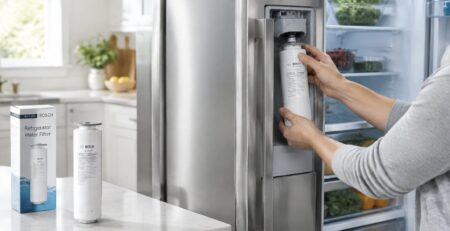
Installation is straightforward. The flush step is where most people cut corners. Skipping it is the main reason a brand-new filter produces cloudy water or gray specks.
Start the Refrigerator Water Filter Replacement Schedule at Installation
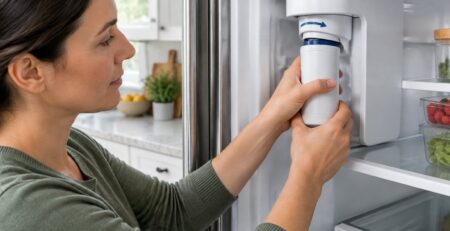
Write the install date on the filter body with a permanent marker before it goes in. That single habit removes all guesswork from your refrigerator water filter replacement schedule six months later.
Reset the status light after the swap. On most Whirlpool and Kenmore models, you hold the filter reset button for three seconds. On many LG units,s the reset is under the dispenser settings menu. On Samsung models,s the ice or water button held for three seconds usually clears it.
If you bought a multi-pack, the leftover cartridges go back into storage under the same conditions covered earlier. Buying a two- or four-pack lowers the per-unit price. That is exactly why so many households end up with a spare in the cabinet.
Flush Out Air and Carbon Fines
New activated carbon sheds fine black particles during the first run. These carbon fines are harmless but unpleasant. They clear fastest with a good flush.
Run water through the dispenser until it comes out clear and steady. Most manufacturers call for two to four gallons depending on the model. A GE XWF asks for roughly three gallons. Several Whirlpool cartridges ask for four.
Dump the first two or three batches of ice as well. The ice maker line holds water that has passed through the filter before the fines are cleared.
Watch for Leaks, Slow Flow, or Cloudy Water
Check behind and under the fridge after ten minutes and again the next morning. A slow drip usually points back to a hardened O-ring or a cartridge that was not seated fully.
Cloudy water right after installation is almost always trapped air. It clears within a gallon or two. Cloudiness that persists after a full flush is worth investigating. Water quality problems that show up on day one are usually installation issues, not filter defects.
Slow flow can mean the cartridge is not aligned or that an old, brittle housing partially blocked the port. That leads to the other side of this topic: what happens when a filter stays in too long.
Do Not Stretch the Life of an Installed Filter
Shelf life gets a lot of attention. The bigger risk is the filter already in your fridge. An expired installed filter is a much clearer problem than an old sealed one.
Replace at Six Months or the Rated Gallons, Whichever Comes First
The standard interval is six months or the rated gallons, whichever comes first. Rated gallons vary by cartridge, so the number matters more than the calendar for heavy users.
Common ratings look like this:
- EveryDrop Filter 1 (EDR1RXD1) and W10295370A: 200 gallons
- GE MWF and MSWF: 300 gallons
- LG LT700P: 200 gallons
- Samsung DA29-00020B: 300 gallons
A family of five with an ice maker running daily can hit 300 gallons well before month six. A two-person household may not reach it by month eight, but the six-month rule still applies. Consumer Reports notes in its guidance on how often to change home filters that owner manual intervals, often twice per year, should drive the schedule.
Why Wet Carbon Can Support Bacterial Growth and Biofilm
Once water flows through a carbon block, that carbon stays damp for the rest of its life in the fridge. Damp carbon with trapped organic material is a favorable environment for bacterial growth and biofilm.
Chlorine in municipal water suppresses this, but the filter is removing that chlorine by design. Past the rated gallons, the carbon holds less, and the protective effect drops.
That is why the answer to when to replace the fridge water filter is a date, not a taste test. Water can taste fine long after the media has stopped performing.
Why NSF Certification and WQA Approval Matter for Scheduled Replacements
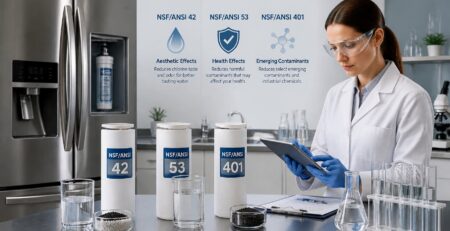
NSF 42 covers chlorine taste and odor reduction. NSF 53 covers health-related claims such as lead and cyst reduction. Those certifications are performance ratings measured across the filter’s rated capacity, not indefinitely.
WQA approval and the WQA Gold Seal confirm that a cartridge was tested against those standards. The certification is only meaningful while you run the filter within its rated life. Push past it, and you are outside what was tested.
Certified compatible filters carry the same NSF 42 and NSF 53 ratings as OEM cartridges when tested to those standards. That is the part that makes replacing on schedule affordable instead of painful.
Make Your Next Replacement Simple and Affordable
Getting the right filter starts with your refrigerator model number, not the filter number you half remember. That one step prevents most ordering mistakes.
Use the Refrigerator Model Number to Confirm Compatibility
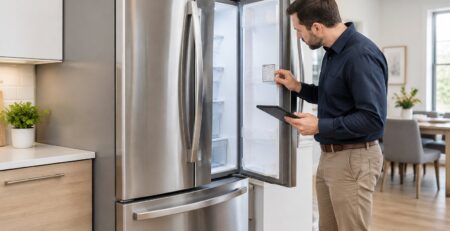
Find the model number on a sticker inside the fresh food compartment, along the left wall, or behind the crisper drawer. Some models list it on the door frame. Write it down exactly, including letters and dashes.
From there, a refrigerator filter cross-reference tool matches your appliance to the correct cartridge. This matters because similar-looking filters are not interchangeable. An EDR1RXD1 will not fit in a housing built for an EDR3RXD1.
Physical fitness is only half of it. Flow rate, port style, and O-ring diameter all have to match. Otherwise, you get leaks and pressure problems.
Choose a Certified Compatible or OEM Filter Based on Your Needs
Both paths work. The difference is price and preference.
- OEM cartridges carry the appliance brand’s own part number, such as the LG LT500P premium water filter or the GE MSWF refrigerator water filter. They are often discounted well below big-box shelf prices.
- Certified compatible cartridges, like the Icepure RFC0900A or Polar PF8001, replace the Maytag UKF8001 and typically cost 30 to 40 percent less while meeting NSF 42 and NSF 53 standards.
Households running a Samsung refrigerator filter or a Whirlpool EveryDrop cartridge usually have both options available. If you keep multiple fridges, standardizing on one path per appliance makes reordering faster.
Find My Filter and Plan Ahead With Free Shipping
Buying two or four at a time lowers the per-unit cost and means the six-month swap never waits on shipping. Just store the spares indoors, sealed, and away from heat.
At FilterForFridge.com, certified replacements start under $30 with free shipping on every order. The team will match your model number by email or phone at no cost. Optional six-month reminder emails keep the schedule from slipping. Browse the refrigerator water filter shop or call 615-758-6915 to confirm your fit.
The Bottom Line on That Old Box in the Cabinet
A sealed refrigerator water filter stored indoors, dry, and away from strong odors is usually fine for two to five years. Inspect the wrap, the caps, the O-rings, and the plastic before installing. If anything looks or smells off, replace it rather than risk a leak or a filter that has already spent its capacity on garage fumes.
The real cost driver is not the occasional replaced cartridge. It is paying $50 to $75 at a big box store every six months for something a certified compatible filter does for a fraction of that. The same NSF 42 and NSF 53 performance is behind it.
If you are not sure which cartridge fits your fridge, send your refrigerator model number to FilterForFridge.com and the team will match it for free. Certified replacements start under $30 and ship free on every order.
Frequently Asked Questions
How Long Can an Unopened Refrigerator Water Filter Sit Unused?
A sealed filter stored indoors in a dry, temperature-stable spot is generally usable for two to five years. The limiting factor is packaging integrity, not the activated carbon itself. If the shrink wrap or foil pouch is intact and the protective caps are in place, the cartridge is very likely still good.
Do Whirlpool Refrigerator Water Filters Have an Expiration Date Before Installation?
Whirlpool and EveryDrop cartridges such as the EDR1RXD1 and W10295370A do not carry a hard expiration date printed on the filter body. Some boxes include a manufacture or lot date instead. The 200-gallon rating applies from the moment water starts flowing. It does not depend on the date it was made.
Can an Unused Samsung Refrigerator Water Filter Go Bad in Storage?
Yes, if the seal fails or storage conditions are poor. A Samsung DA29-00020B stored in a hot garage next to solvents can adsorb ambient odors and volatile organic compounds through a compromised wrap. Stored sealed and indoors, it holds its full 300-gallon capacity.
What Happens If You Install a Refrigerator Water Filter After Its Expiration Date?
If the seal holds, the filter usually performs normally and delivers its full rated gallons. If the seal failed, the carbon may have less capacity, and the water can taste faintly chemical for the first few gallons. Damaged O-rings on an old cartridge are the more common problem and often cause slow leaks.
Should I Replace a Sealed Refrigerator Water Filter That Has Been Stored for Several Years?
Inspect it first rather than tossing it automatically. If the wrap is intact, the caps are on, the O-rings are soft, and there is no odor, install it and flush thoroughly. If it was stored in a flooded, hot, or chemical-heavy space, replacing it is the safer call at a cost of roughly $30.
How Should Unused Refrigerator Water Filters Be Stored to Maintain Their Quality?
Keep them in the original sealed box, indoors, between 50 and 80 degrees Fahrenheit, and out of direct sunlight. Avoid garages, attics, damp basements, and any spot near paint, fuel, or cleaning chemicals. Storing them upright and off concrete floors protects both the housing and the carbon.