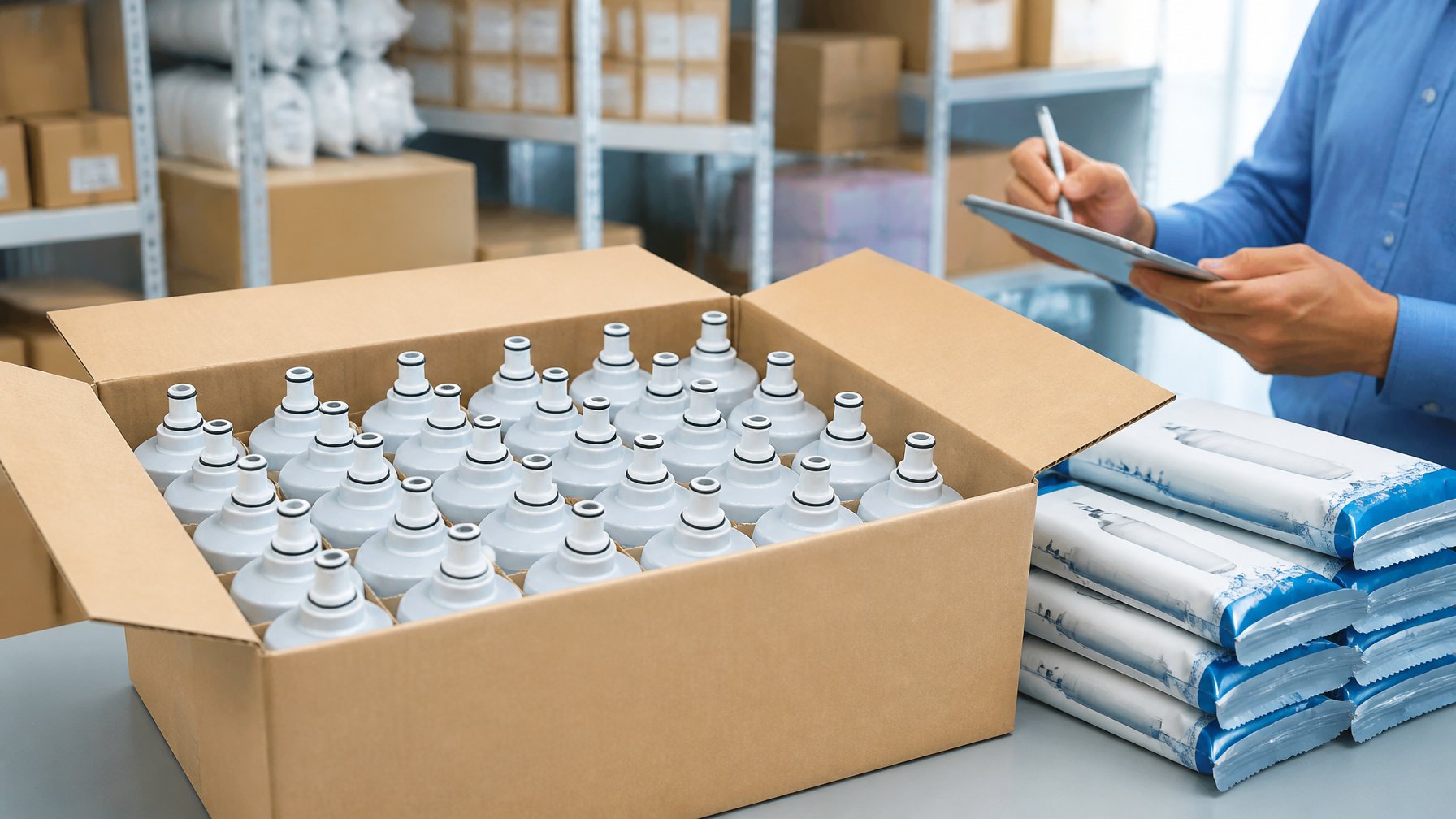
Buying Refrigerator Water Filters in Bulk
You open the fridge door, see the red filter light glowing again, and remember what the last one cost. A single name-brand cartridge often runs $50 or more, and you are supposed to swap it every six months. That math starts to sting by the second or third replacement.
Buying refrigerator water filters in bulk is the simplest fix for that recurring bill. Two-packs, three-packs, and four-packs drop the price per cartridge. Certified compatible options keep the same NSF and Water Quality Association (WQA) standards as the original. You are not trading safety for savings. You are trading a retail markup for a smarter order size.
Keep reading to learn where multi-pack savings actually show up and how to confirm your filter part number before you order several. You will also see which certifications matter for your water and how many filters to keep on hand. The goal is fewer trips, fewer surprise costs, and less of your weekend spent on appliance upkeep.
See Where Multi-Pack Savings Add Up
The savings from bulk buying come from two places: a lower price per cartridge and shipping you only pay for once. Both add up fast when you replace filters twice a year.
When Buying Refrigerator Water Filters in Bulk Pays Off
Bulk buying makes sense when your replacement schedule is predictable. Most manufacturers and most refrigerator water filters are rated for six months or 300 gallons, whichever comes first. That means you already know you will need another cartridge before next spring.
Compatible refrigerator filters like the Icepure RFC0600A, an alternative to the GE MWF, run roughly 40% less than the original. Buy two of those instead of two single OEM units. The gap widens again at the multi-pack tier.
Situations where stocking up clearly pays:
- You replace on a strict six-month schedule and never skip
- Your household drinks and makes ice heavily, so 300 gallons arrive early
- You want a spare on the shelf so a clogged cartridge never waits on shipping
- You manage more than one refrigerator under the same roof
So how do you tell a real discount from a bigger box at the same rate?
Compare Per-Filter Cost Instead of Package Price
Divide the total by the number of cartridges. A four-pack at $96 is $24 per filter. A single unit at $32 looks cheaper on the shelf tag but costs 33% more per replacement.
Run the same math against big-box pricing. Consumer Reports notes that most name-brand replacements retail around $50 in its refrigerator water filter testing. At $24 per certified compatible filter, two years of replacements cost about $96 instead of roughly $200.
Per-gallon cost is the other useful number. A filter rated for 300 gallons at $24 works out to eight cents per gallon of filtered water, ice included. Now factor in the part most shoppers forget to count.
How Free Shipping Lowers the Total Replacement Cost
Shipping is a real line item. Paying $7 or $8 twice a year adds $15 to your annual filter cost. This can erase a small unit discount entirely.
When shipping is free on every order, a multi-pack ships once and covers two years. You pay nothing extra to have the next three cartridges sitting in a cabinet, ready. That is the multiplier most shoppers miss on bulk savings. It applies whether you buy a two-pack or a four-pack from a refrigerator water filter catalog.
None of that helps, though, if the four cartridges you just ordered do not fit your fridge.
Match Every Filter Before Ordering
Ordering four of the wrong filters turns a good deal into a return. Confirm the exact part number first, because one wrong digit puts you in a different housing style entirely.
Find the Filter Part Number on Your Current Cartridge
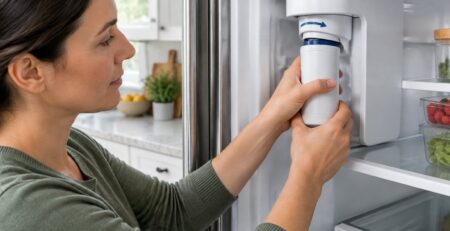
Pull the old filter out and read the label. The part number is printed directly on the cartridge body, usually near the top collar. Common examples include UKF8001 for Maytag, LT700P for LG, ULTRAWF for Frigidaire, and EPTWFU01 for the Frigidaire PureSource Ultra II.
If the housing is empty or holds a bypass plug, check the manual. You can also find the refrigerator model number on a nameplate inside the fresh food compartment, often along the left wall or near the crisper drawers.
Write the number down before you shop. Buyers search by model, and a cross-reference filter tool will match an OEM part number to its certified compatible equivalent in seconds.
Confirm Refrigerator Brand, Model, and Filter Housing
Part numbers alone do not tell you how a filter installs. A push-in grille filter and a twist-in interior filter are not interchangeable, even within the same brand family.
GE alone makes six filter models: the MWF, MSWF, XWF, GSWF, RPWFE, and AFPWF. Each fits only certain refrigerators. The GE MSWF replacement filter will not seat in a housing built for the GE XWF cartridge. Both are GE parts, but not interchangeable.
Match all three before you commit to a multi-pack: brand, refrigerator model number, and filter part number.
Popular Part Numbers to Double-Check Before Buying
A few models get confused more than others. These are worth a second look:
- UKF8001 for Maytag and Amana, with Icepure RFC0900A and Polar PF8001 as compatible alternatives
- W10295370A and EDR1RXD1 for Whirlpool and Kenmore, sold as Filter 1
- LT700P for LG French door models, distinct from the older LT500P
- ULTRAWF and EPTWFU01 for Frigidaire, similar names, different housings
- DA29-00020B for Samsung, often mislabeled in generic listings
The Whirlpool EveryDrop Filter 1 and the W10295370A cartridge are the same filter under two part numbers. This trips up plenty of first-time buyers. Once the fit is confirmed, the next question is whether a cheaper cartridge filters as well as the original.
Choose Certified Quality at a Lower Per-Unit Price
A lower price per unit does not mean lower performance, as long as the filter carries real certification. The mark to look for is NSF/ANSI certification verified by an accredited body such as WQA.
What NSF Certification and WQA Approval Tell You
NSF/ANSI standards are specific, and each number covers different work. NSF 42 covers chlorine taste and odor plus material safety. This ensures the filter housing does not leach anything into your water. NSF 53 covers health-based contaminants including lead, mercury, cysts, and parasites.
Two more standards show up on fridge filters. NSF 372 confirms the filter is essentially lead-free by material content. NSF 401 covers trace pharmaceuticals and chemicals.
WQA is one of three major bodies that test and certify these products, along with NSF and the International Association of Plumbing and Mechanical Officials (IAPMO). WQA’s product certification program verifies performance claims against those same standards. A WQA-approved compatible filter has been tested, not just labeled.
OEM Filters Versus Compatible Replacement Filters
OEM means the filter is made or branded by your refrigerator’s manufacturer. Compatible filters are built to the same dimensions and specifications by a different manufacturer and then certified independently.
Price is where they split. The Icepure RFC0600A costs about 40% less than the GE MWF it replaces. The Icepure RFC0900A and Polar PF8001 do the same for the Maytag UKF8001.
If you prefer the original, discounted OEM units are still an option. This includes the LG LT500P premium water filter. The choice is about preference and budget, not about whether one is certified and the other is not.
Check the Reduction Claims That Matter for Your Water
Your local water report decides which standard you need. If your city water is already clean and you mainly want better taste, an NSF 42 filter handles chlorine taste and odor, sediment, and rust for less money.
If your report flags lead, or you are on a supply where cysts like Cryptosporidium and Giardia are a concern, look specifically for NSF 53 reduction claims. Not every filter certified to NSF 53 covers every contaminant on that list, so read the claim.
Sediment and rust particles also matter for hardware, not just taste. They are what clog a cartridge early and slow your dispenser. That raises a practical question: how many filters should you actually keep on hand?
Plan the Right Quantity for Your Household
Buy for your real replacement rate, not for the biggest discount tier. A four-pack you use over four years is fine. Two years’ supply is the sweet spot for most households.
A Two-Pack for One Refrigerator on a Six-Month Schedule
One refrigerator on a six-month cycle uses two filters a year. A two-pack covers you for twelve months with a single order and a single free shipment. This works well for a family of two to four who drink filtered water daily and run the ice maker regularly.
You will notice when it is time: ice quality drops first. Water flow slows at the dispenser. Two-packs also make it easy to test a compatible model. Try one RFC0600A, keep the second in the cabinet, and you have a real comparison before committing to a larger order.
When a Three-Pack or Four-Pack Makes Sense
Go bigger when your usage is heavy or your schedule is tight. Households of five or more often hit 300 gallons before the six-month mark. This means three cartridges a year instead of two.
A four-pack also makes sense if you have well water with visible sediment, since particles shorten useful filter life. Same if you host often, run a second ice maker, or fill water bottles for a whole family every morning.
Signs you should size up your next order:
- Water flow slows noticeably before month five
- Ice tastes flat or looks cloudy earlier than expected
- You have more than three people drinking from the dispenser daily
- You would rather never think about it again for two full years
Bulk Orders for Multiple Refrigerators and Rental Properties
Managing more than one fridge changes the math completely. A property manager with four units might need four different part numbers: ULTRAWF for two Frigidaire units, LT700P for an LG, and EDR1RXD1 for a Whirlpool.
Buying two-packs of each beats buying eight singles. The per-unit price drops. Everything ships free in one order, and you keep replacement refrigerator water filters labeled by unit in a supply closet.
For garage refrigerators or a second kitchen fridge, remember that light use still ages a filter. Six months applies even at low volume, because the carbon media sits wet the entire time. Which brings up something people rarely plan for: where do all those spare cartridges live until you need them?
Store, Install, and Track Your Replacement Filters
Spare filters keep well, but only if you store them right and install them properly. Both steps protect the certified performance you paid for.
How to Store Unused Filters Until You Need Them
Leave the cartridge sealed in its original packaging until the day you install it. Activated carbon absorbs odors from the air. An unwrapped filter sitting in a cabinet next to cleaning supplies can pick up smells.
Store spares somewhere cool, dry, and out of direct sunlight. A pantry shelf or linen closet works. A hot garage, a damp basement, or the space under the kitchen sink does not.
Check the seal before you install any filter that has been on the shelf for a while. If the wrapper is torn or the cap is loose, the media has been exposed to air and moisture.
Flush a New Filter and Watch for Changes in Water Flow
Every new cartridge needs flushing. Run two to four gallons through the dispenser. This usually takes three to five minutes, until the water runs clear and the sputtering stops.
That first water may look cloudy or gray. This is carbon fines and trapped air, not a defect. It clears on its own. Dump the first two batches of ice as well.
After flushing, note the flow. A properly seated filter should dispense at least 16 ounces per minute. If it is slower right out of the box, reseat the cartridge and confirm you have the correct model for your housing.
Set a Six-Month Reminder Before Your Supply Runs Low
The filter indicator light on your fridge tracks water volume, not time. It can lag on low-use refrigerators. A calendar reminder is more reliable.
Set it for five months and three weeks, not six months, so you have a week to install without rushing. Note the part number in the reminder itself: “Replace UKF8001, spare in pantry” beats a vague nudge.
Some homeowners prefer an email reminder every six months instead. Either way, the reminder should fire while you still have a spare on the shelf. Not after.
All of this comes together in the smartest version of your next bulk order.
Make Your Next Filter Order Go Further
The best bulk order starts with a confirmed part number and ends with a multi-pack that ships free. Get those two things right. Your filter cost drops for years, not just once.
Use Model-Matching Support Before You Stock Up
If you are between two part numbers, ask before you buy four of either. Free model-matching support costs nothing and prevents a return on a multi-pack.
Send your refrigerator brand, model number, and the part number printed on the old cartridge. That is enough to identify the right compatible refrigerator filter. This includes edge cases like LT700P versus LT800P or ULTRAWF versus EPTWFU01.
You can also call and read the numbers off the cartridge. Reach the team at (615) 758-6915 or email the support team with your model.
Shop Certified Multi-Packs With Free Shipping
Once the fit is confirmed, buy the quantity that matches your real schedule. Certified compatible filters start under $30. The per-unit price falls further at the two-, three-, and four-pack tiers.
Free shipping applies to every order. A four-pack costs you one shipment instead of four. Browse top-rated refrigerator water filters or go straight to brand pages for LG refrigerator filters and Samsung refrigerator filters.
A quick checklist before you place the order:
- Part number confirmed against the old cartridge, not guessed
- NSF 42 or NSF 53 certification is listed for the claims you need
- Quantity matched to your six-month schedule
- Free shipping is applied, so the per-filter price is the real price
One more set of questions tends to come up right before checkout.
Frequently Asked Questions
How Much Can I Save by Ordering Refrigerator Water Filter Replacements in Multi-Packs?
Most households save 30% to 50% per cartridge compared to buying single name-brand units at retail. A certified compatible filter like the Icepure RFC0600A already costs about 40% less than the GE MWF. Multi-pack pricing lowers the per-unit cost further. Free shipping removes the delivery charge you would otherwise pay twice a year.
Are Bulk Replacement Filters Compatible With Whirlpool, GE, Samsung, LG, and Frigidaire Refrigerator Models?
Yes, compatible cartridges exist for more than ten major brands, including Whirlpool EDR1RXD1, GE MWF and MSWF, Samsung DA29-00020B, LG LT700P, and Frigidaire ULTRAWF. Each one is built to the same dimensions and flow specifications as the original part. Always match the part number on your current cartridge before ordering several.
How Do I Confirm the Correct Filter Model Number Before Ordering Several Replacements?
Pull the old cartridge and read the part number printed on the label. Then check it against your refrigerator model number from the nameplate inside the fresh food section. If the housing holds a bypass plug instead of a filter, the owner’s manual lists the correct model. A cross-reference tool or a quick email with both numbers confirms the match at no cost.
Should Bulk Refrigerator Filters Be NSF 42, NSF 53, or NSF 401 Certified?
It depends on your water. NSF 42 covers chlorine taste and odor, plus material safety, and is enough for most treated city water. Choose NSF 53 if your local report flags lead, mercury, or cysts. NSF 401 is best if trace pharmaceuticals and chemicals are a concern.
How Long Can Unopened Refrigerator Water Filters Be Stored Before Installation?
An unopened filter in its sealed packaging typically stays good for several years when stored cool, dry, and out of sunlight. The risk is not the carbon breaking down. It is the seal failing and letting in moisture or odors. Inspect the wrapper and cap before installing any cartridge that has been on the shelf for a long time.
Are WQA-Approved Compatible Filters as Reliable as Higher-Priced OEM Refrigerator Filters?
A WQA-approved, NSF-certified compatible filter has been tested against the same NSF/ANSI standards as the OEM cartridge it replaces. Certification is performance-based, so the mark means the filter met the reduction claims it advertises. The main difference between the two is price, not verified performance.
Buy Fewer Times, Pay Less Each Time
Buying refrigerator water filters in bulk is not about hoarding cartridges. It is about paying $24 instead of $50 for the same certified performance. Then you do not have to think about it again for a year or two.
Confirm your part number, pick the NSF standard your water actually needs, and order the quantity that matches your six-month schedule. Certified compatible filters start under $30. Every order ships free. The per-unit price drops as the pack size goes up.
Still unsure whether you need the ULTRAWF or the EPTWFU01? Email your model number, and the team at FilterForFridge.com will match it for you at no charge. Then you can stock up with confidence.