Refrigerator Water Filter Leaking? Find the Source and Stop the Drip
A leaking refrigerator water filter is almost always a sealing problem between the cartridge and the filter head. The usual culprits are a protective cap left on the new filter, a torn or missing O-ring, a cartridge that isn’t fully locked, or a filter that doesn’t match your fridge. If a correct, fully seated filter with good O-rings still drips, the filter head or housing is likely cracked.
Most filter leaks start within a day of a filter change, which is good news. It means the cause is usually something you just touched, and you can check it in a few minutes with a towel and a flashlight.
Even a slow drip deserves attention. Water can run under the fridge and into flooring or cabinets long before you see a puddle.
First, Stop the Water
Close the shutoff valve that feeds the refrigerator. You’ll usually find it under the kitchen sink, behind the fridge or in the basement below the kitchen. If there’s no dedicated valve, close the main water valve for the house while you work.
Lay towels under the filter and along the front of the fridge. If water has reached the bottom grille or anywhere near an outlet, unplug the fridge before you go further.
Pin Down Where the Water Is Coming From
Water travels, so the puddle isn’t always under the leak. Dry everything you can reach, then watch to see where moisture appears first.
Use a Paper Towel as a Leak Detector
Wrap a dry paper towel around the seam where the cartridge meets the filter head. Turn the water back on for a minute, then check it. A damp towel tells you the leak is at the filter connection. A dry towel sends you looking elsewhere.
Read the Clues
- Wet at the seam between cartridge and head: a seal problem. Start with the checks in the next section.
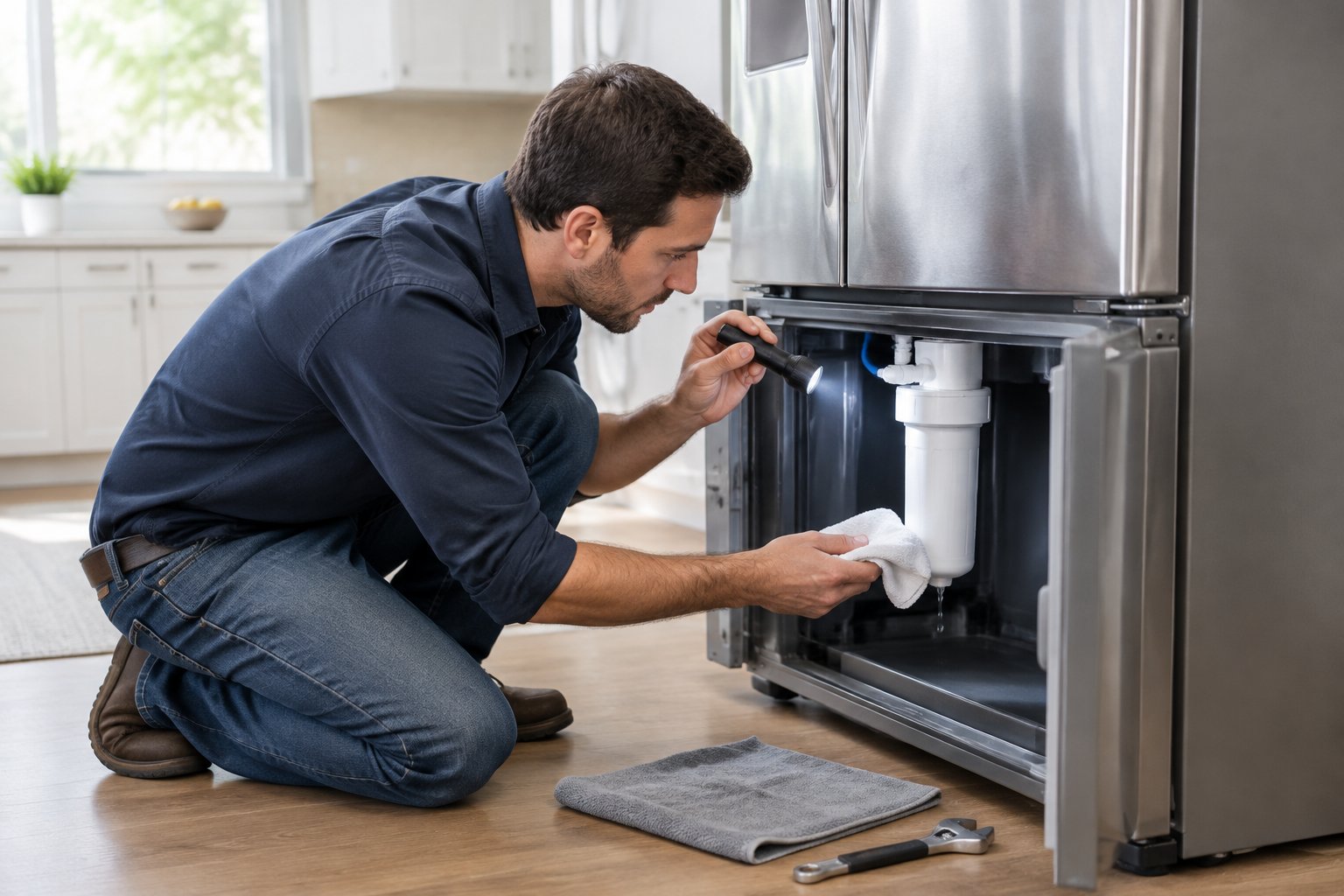
- Beads of water on the head or housing itself: shine a flashlight across it and look for a hairline crack.
- Dry filter, but water behind or under the fridge: the supply line or its fittings are the more likely source.
- Water pooling under the crisper drawers: that’s often a blocked defrost drain, a different issue from the filter.
Fix the Common Seal Problems
Work through these in order. The first two catch a large share of post-change leaks.
Look for a Shipping Cap
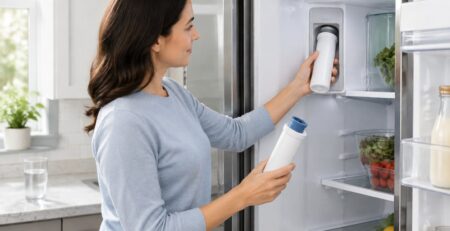
Many new filters ship with a plastic cap or cover over the connecting end to protect the seals. If it’s still on, the filter can’t seal properly and water escapes around it. Take the filter out and check the end that goes into the fridge.
Inspect the O-Rings
The rubber rings on the filter’s connecting end do the actual sealing. Look at them under good light for:
- Cuts, nicks or tears
- A ring that’s flattened, stretched or twisted
- A ring that has rolled out of its groove or is missing
- Grit, hair or mineral crust on the ring or inside the head
Wipe the rings and the inside of the filter head with a soft, damp cloth. If a ring is damaged, replace the cartridge, since the rings on most filters come with the filter. Rings also harden with age, so an old filter can start weeping near the end of its life even if nothing else has changed.
Seat It Fully, by Hand
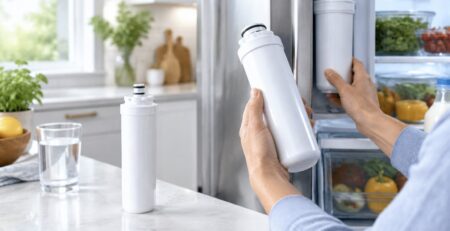
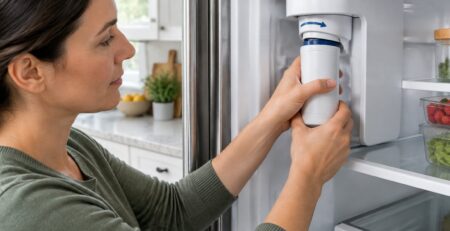
A filter that sits a few degrees short of its lock position will drip at the seam. Reinstall it straight, lining up any arrows or tabs, and turn or push until it stops firmly. Push-in styles should click. Use hand pressure only. Forcing a filter past its stop squashes the O-rings and can crack the head you’re trying to protect.
Confirm the Part Number
Filters that look almost identical can differ in length, seal design or lug position. A near match may lock in and still leak. Compare the number on the new filter with the old one and the label inside your fridge. Our guide on how to find the right refrigerator water filter shows where to look.
If the cartridge turns out to be damaged, old or the wrong part, we carry refrigerator water filters for all the major brands, from genuine OEM to certified compatible, at lower prices than the big-name retailers. Shipping is free on every order.
Turn the Water Back On and Test
- Open the supply valve slowly.
- Repeat the paper towel check at the seam.
- Run water through the dispenser as your filter’s instructions direct to flush out air.
- Check the seam, the floor and behind the fridge again after an hour, then once more the next morning.
A few drips from the dispenser nozzle just after a filter change are usually air working its way out, and they stop as the line fills. Water at the filter seam is different: it means the seal still isn’t right.
Signs the Housing Needs Repair
If a correct filter with intact O-rings is fully locked and the seam still drips, the problem is in the part the filter plugs into.
A Cracked Filter Head
The filter head is the plastic fitting inside the fridge that the cartridge locks into. Age, a cross-threaded filter or too much force at an earlier change can leave a fine crack that you can only spot on a dry surface with a flashlight. Once the head is cracked, no filter will seal against it.
The head is a model-specific part, and replacing it usually means working with internal water lines, so most homeowners hand this job to an appliance technician. Keep the water off until then.
High Water Pressure
Very high household pressure puts extra strain on filter seals. Your fridge’s installation guide lists the maximum inlet pressure it’s designed for. If you suspect your home runs high, a plumber can test it and fit a pressure regulator if needed.
Avoid Leaks at Your Next Change
Knockoff filters sold through anonymous marketplace listings are a known source of leaks, because loose tolerances and thin seals don’t hold up. Our guide on how to spot counterfeit water filters shows the warning signs. Buy from a seller who can confirm the exact fit for your fridge, and after each install, do the same quick check: cap off, rings seated, locked by hand, paper towel at the seam.
Frequently Asked Questions
Why did my fridge start leaking right after a filter change?
Timing like that almost always points to the new cartridge: a cap left on, a filter not fully locked, a pinched O-ring or the wrong part. Remove it, check each of those, and reinstall it by hand.
Is it safe to keep running the fridge while the filter leaks?
Yes, for cooling. Keep the water supply off until the leak is fixed, and turn off the ice maker so it doesn’t keep calling for water.
Should I put silicone grease on the O-rings?
Only if your filter or refrigerator instructions say to. Some manufacturers suggest a thin film of food-grade silicone grease, but most filters go in as they are. Never use petroleum jelly or household oils, which can damage rubber seals.
Will a certified compatible filter leak more than an OEM one?
Not if it’s made for your exact model and installed correctly. Fit and build quality decide whether a filter seals, which is why certified compatible filters from a trusted source are a safe way to save.
Get a Filter That Fits the First Time
The surest way to a dry floor is a filter made for your fridge. Search your model in our Cross Reference Filter Tool, or reach out with your fridge or filter number and our team will confirm the right match. We ship every order free.